
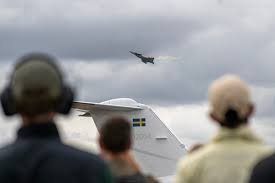
A Strategic Pivot in the Clouds: Saab Gripen’s Bold Bid for Canada
In the heart of Linköping, Sweden, at the Saab final-assembly hall, a white banner hangs with a single word in bold red letters: RESERVED. While Saab officials remain tight-lipped, the implication is clear—they are eyeing Canada as their next major partner. As the federal government re-evaluates its military strategy, the Canada fighter jet procurement process is heating up, placing the Saab Gripen in a fascinating position to challenge the status quo.
More Than Just a Plane: A Sovereign Aerospace Vision
Saab isn’t just offering a high-performance aircraft; they are offering Canada a seat at the table of aerospace superpowers. Unlike traditional procurement deals, Saab is proposing a comprehensive start-to-finish production line within Canadian borders.
If Canada commits to a sufficiently large order, the JAS 39E Gripen would be built locally, utilizing a network of approximately 10 prime partners and 250 suppliers across multiple provinces. This would mark the first time a full Gripen assembly line has existed outside of Sweden.
The F-35 Friction and the Trade War Factor
For years, the path seemed set: Canada chose the Lockheed Martin F-35 to replace its aging CF-18 fleet. However, geopolitical tensions have clouded this agreement. A growing trade rift with the United States, characterized by tariffs and shifting political climates, has led Prime Minister Mark Carney to order a formal review of the remaining F-35 contracts.
The dilemma is clear: Does Canada continue with its primary military supplier, or does it diversify to protect its economic and strategic sovereignty? Saab CEO Micael Johansson puts it bluntly: “Canada has to decide if it wants a sovereign aerospace industry.”
Economic Windfalls: Who Benefits?
The potential Saab Gripen deal isn’t just about defence; it’s a massive industrial stimulus package. Saab has outlined a strategic regional distribution of work to ensure the benefits are felt coast-to-coast:
- n
- Quebec (50%): The primary hub for production and high-tech assembly.
- Ontario (26%): A focus on advanced manufacturing and engine maintenance.
- The West (14%): Specialized components and regional support.
- Atlantic Canada (10%): Strategic logistics and support services.
Furthermore, Saab proposes the creation of six “Innovation Hubs” dedicated to AI, cybersecurity, and Arctic innovation, ensuring Canada remains at the cutting edge of military technology.
Solving the “American Part” Puzzle
One of the biggest hurdles for any non-U.S. jet is the engine. The Gripen utilizes the GE F414 engine, which is subject to strict U.S. ITAR regulations. To bypass the need to ship engines back to the States for repair, GE Aerospace and Magellan Aerospace have already signed a memorandum of understanding to perform overhauls in Mississauga, Ontario.
The Bottom Line: A Dual-Fleet Future?
Interestingly, Saab isn’t necessarily asking Canada to abandon the F-35 entirely. The vision is a complementary fleet—integrating both the stealth capabilities of the F-35 and the sovereign flexibility and efficiency of the Gripen.
As the Department of National Defence continues its review, the decision will signal more than just a choice of aircraft; it will define Canada’s industrial independence for the next half-century.



