
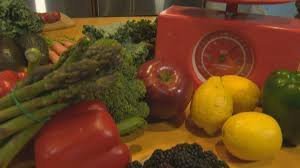
The Battle Against the Grocery Bill: Is Canada’s New Food Strategy the Answer?
For millions of Canadians, the weekly trip to the grocery store has become a source of anxiety. With inflation squeezing household budgets, the question is no longer just about what to buy, but whether it’s affordable. In response, the federal government, led by Prime Minister Mark Carney, has unveiled the National Food Strategy—a bold, $750 million gamble to reshape how Canada produces its food.
The primary goal? To reduce Canada’s heavy reliance on imports and bring down the cost of fresh produce by boosting domestic, year-round production.
The Plan: Greenhouses, Vertical Farms, and High-Tech Growth
Currently, Canada is startlingly dependent on foreign soil. Approximately 90% of our fruits and 70% of our vegetables are imported. To combat this, the government is investing heavily in Controlled Environment Agriculture (CEA). This includes:
- n
- Scaling up Greenhouses: Expanding the existing 35.9 million square metres of greenhouse space.
- Vertical Farming: Utilizing stacked layers of crops to maximize urban space.
- Enclosed Growing Spaces: Creating climate-controlled environments that defy the harsh Canadian winter.
The Canadian Produce Marketing Association (CPMA) has lauded this as the highest investment in the fresh produce sector in recent history, promising a more resilient and self-sufficient food supply chain.
The Great Debate: Can Technology Outsmart the Climate?
While the investment is historic, experts and citizens are divided on whether this will actually lead to cheaper carrots and cucumbers at the checkout counter. There are three major hurdles the strategy must overcome:
1. The Energy Equation
Growing food in January in Manitoba is vastly different from growing it in Florida. Critics argue that the cost of “fake sunlight” (artificial lighting) and heating massive greenhouses will keep production costs high. Some argue that carbon taxes on energy inputs further inflate these prices, making domestic production less competitive than importing from warmer climates.
2. The Scale Challenge
Professor Barry Prentice from the University of Manitoba points out that greenhouse production is currently concentrated in Ontario (nearly 65%), BC, and Quebec. Expanding this to the Prairies requires massive infrastructure investment. While some suggest a “community-led” model—similar to an Airbnb for farming—where smaller, smarter greenhouses are shared among locals, the government’s current focus remains on large-scale industrial expansion.
3. The “Orange” Paradox
Can Canada really grow everything? Experts suggest that some crops, like oranges or bananas, are simply not viable to produce domestically at a price that competes with the US or Mexico. Relying solely on domestic production might be an unrealistic goal; instead, diversifying trade partners across South America and Asia may be the more practical path to food security.
The Bottom Line: Innovation vs. Reality
With greenhouse sales already hitting $6.5 billion in 2025, the industry is growing. However, the National Food Strategy is a race against time and temperature. Whether $750 million is enough to shift the needle on food inflation remains to be seen.
For now, consumers are encouraged to buy seasonal produce to keep costs down and support local farmers who are navigating the complex intersection of climate change and economic volatility.
What do you think? Will high-tech greenhouses lower your grocery bill, or is the solution in diversifying our trade? Let us know in the comments!



