
A Historic Homecoming: The Bayeux Tapestry Returns to the UK After 1,000 Years
In a breathtaking moment of historical significance, the Bayeux Tapestry has officially returned to British soil for the first time in nearly a millennium. Arriving under the cover of night with a heavy police escort, this priceless masterpiece has landed at the British Museum, marking a diplomatic and cultural milestone between France and the United Kingdom.
This isn’t just a museum loan; it is a homecoming. For many, seeing the tapestry in England—the very land whose fate it depicts—is a profound experience that connects the modern world to the pivotal events of 1066.
What Exactly is the Bayeux Tapestry?
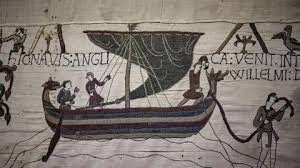
Despite its name, the Bayeux Tapestry is not actually a tapestry. It is a stunning piece of 11th-century embroidery, crafted from linen and decorated with colored woolen yarn. Spanning 70 meters in length, it serves as a visual narrative of one of the most consequential eras in human history.
The artwork is divided into 58 vivid scenes that chronicle the events leading up to the Battle of Hastings and the subsequent Norman Conquest of England. Within its threads, you will find:
- n
- 626 characters, depicting the clash of kings and nobles.
- 202 horses and detailed depictions of Viking-style ships.
- The dramatic moment an arrow strikes the soldier believed to be King Harold II.
The Logistics of Moving a Masterpiece
Transporting a 1,000-year-old textile across the English Channel is no small feat. Given its extreme fragility, the transport was a feat of modern engineering. To prevent any damage, the tapestry was housed in a specialized crate featuring:
- Climate Control: Strict regulation of temperature and humidity to prevent fiber degradation.
- Shock Absorption: An outer cage equipped with metal springs to neutralize vibrations from the road.
- Rigorous Testing: Two trial runs were conducted using a textile copy to ensure the route was safe.
While some critics and artists, including the late David Hockney, expressed concerns over the risks of moving such a precious object, museum experts assure that the meticulous planning has made the journey entirely secure.
A Symbol of Franco-British Friendship
The loan was made possible through a high-level agreement between French President Emmanuel Macron and Prime Minister Sir Keir Starmer. President Macron described the gesture as a “tangible expression of a long-standing friendship,” signaling a desire for both nations to build a shared future based on their complex, intertwined history.
In a reciprocal act of cultural exchange, the British Museum is loaning legendary treasures to France, including the Sutton Hoo hoard and the 12th-century Lewis chess pieces.
Why the Norman Conquest Changed Everything
The events depicted in the Bayeux Tapestry did more than just change the ruling dynasty; they reshaped the DNA of England. The Norman Conquest shifted England’s focus away from Scandinavia and toward continental Europe, integrating the country into a vast Norman realm.
The impact is still visible today, most notably in the English language. Thousands of French words—ranging from legal terms like justice and parliament to culinary terms like beef and mutton—entered the lexicon following the conquest.
Visit the Exhibition
The excitement is palpable, with a record 100,000 tickets sold on the first day. For the first time in history, visitors will be able to view the work from a mezzanine level, allowing for a complete overview of the entire 70-meter narrative. This exhibition is poised to be the “blockbuster show of a generation,” capturing the imagination of history enthusiasts worldwide.
To learn more about the artifacts and the era of the conquest, you can explore the official British Museum website or dive deeper into the history of the Norman Conquest via Britannica.



