
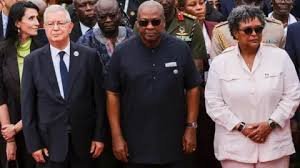
The Unending Echoes of History: Barbados and the Demand for Justice
For centuries, the legacy of the transatlantic slave trade has left deep scars across the globe, particularly within the Caribbean and Africa. Today, nations like Barbados—a leading voice in the CARICOM movement—and various African states are refusing to let history remain a silent tragedy. They are demanding more than just words; they are calling for formal apologies and tangible reparations from the countries that built their wealth on the backs of enslaved people.
The Accra Conference: A Blueprint for Healing
The momentum for this movement reached a fever pitch during a landmark three-day conference in Accra, Ghana. The “Next Steps” conference served as a critical junction for advancing reparatory justice, resulting in the endorsement of a comprehensive 19-point reparations plan. This plan is not merely about financial compensation but addresses the systemic devastation caused by centuries of exploitation.
Key demands from the endorsed plan include:
- n
- Comprehensive Debt Relief: Addressing the economic shackles that still bind many developing nations.
- Restitution of Cultural Property: The return of looted artifacts and cultural heritage to their rightful origins.
- Global Reparations Fund: The establishment of a dedicated fund to support the descendants of the enslaved.
- Gender-Specific Justice: Acknowledging and addressing the unique and disproportionate trauma experienced by African women and girls.
A Global Divide at the United Nations
The push for justice is not without friction. In a historic move, the United Nations General Assembly passed a resolution recognizing the transatlantic slave trade as the “gravest crime against humanity.” While 123 countries voted in favor, the resolution highlighted a stark geopolitical divide. The United States, Israel, and Argentina voted against the declaration, while the United Kingdom and several EU members abstained.
The debate centers on a fundamental disagreement: while leaders like Ghana’s President John Dramani Mahama argue that history demands a “responsibility” rather than inherited guilt, the UK and US have maintained that current institutions cannot be held legally liable for wrongs committed centuries ago.
The Bitter Irony of Historical Payments
One of the most poignant arguments for reparations is the historical precedent of who actually received compensation. In a cruel twist of irony, when the UK abolished slavery in the 1830s, the government did not pay the enslaved people for their suffering. Instead, it paid slave owners the equivalent of over $21 billion in today’s currency.
This historical fact underscores the argument made by advocates in Barbados and across the Caribbean: the financial structures of the modern world were built on a foundation of theft and dehumanization, and therefore, the correction must be systemic.
Looking Forward: Is Justice Possible?
As French President Emmanuel Macron noted, reparations should not be viewed as a simple “cheque written to bring the story to a close.” True reparatory justice requires a transformation of international relations and a sincere acknowledgment of the dehumanization of millions of men, women, and children.
For the people of Barbados and the wider African diaspora, the fight is not about erasing the past, but about ensuring that the future is built on a foundation of truth and equity. The road to reparations is long, but the global conversation has officially shifted from if justice is necessary to how it will be achieved.
To learn more about the regional efforts for justice, visit the CARICOM official portal.



