
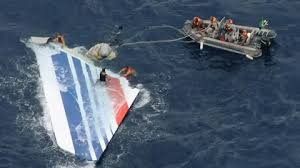
Aviation Accident and Incident: Air France and Airbus Found Guilty in AF447 Tragedy
In a landmark ruling that brings a semblance of closure to grieving families, the Paris Appeals Court has found Air France and Airbus guilty of manslaughter. The court held both the airline and the aircraft manufacturer “solely and entirely responsible” for the catastrophic 2009 crash of Flight AF447, a tragedy that remains one of the most scrutinized cases in the history of aviation accidents and incidents.
The Legal Battle: Responsibility and Verdict
The road to justice has been long and arduous. While a lower court had previously cleared the companies in April 2023, a subsequent eight-week trial led to the current conviction. Both Air France and Airbus have consistently denied any wrongdoing and have indicated their intention to appeal the decision.
The court ordered both companies to pay the maximum fine of €225,000 each. However, for many families, this amount feels like a “token penalty” compared to the magnitude of their loss. Daniele Lamy, president of the AF447 victims’ association, expressed that the verdict finally acknowledges the “unbearable brutality” and pain faced by the families.
What Happened to Flight AF447?
Flight AF447 was traveling from Rio de Janeiro to Paris when it vanished over the Atlantic Ocean. The disaster claimed the lives of all 228 people on board, including 216 passengers and 12 crew members, making it the deadliest aviation incident in French history.
Investigations revealed a fatal combination of technical failure and human error:
- n
- Technical Failure: Ice buildup in the plane’s speed sensors (Pitot tubes) caused faulty air-speed readings.
- Pilot Confusion: With the captain on a break, the co-pilots were overwhelmed by the conflicting data.
- Incorrect Reaction: Instead of pushing the nose down to recover from the stall, the pilots mistakenly pointed the aircraft upwards, causing it to plunge from 38,000 feet into the sea.
The wreckage was only located after an exhaustive search of 10,000 square kilometres of the ocean floor, and the flight recorders were not recovered until 2011.
The Human Cost of the Tragedy
The victims represented 33 different nations, highlighting the global nature of the tragedy. Among those lost were 61 French nationals, 58 Brazilians, and 26 Germans, as well as doctors from Ireland and members of the Brazilian royalty. For many families, the agony was prolonged; some were only able to bury their loved ones years after the initial crash.
Lessons Learned in Aviation Safety
Every major aviation accident and incident serves as a catalyst for safety improvements. In the wake of AF447, the aviation industry implemented critical changes:
- n
- Enhanced Training: Pilot training has been overhauled to better prepare crews for high-altitude stalls and sensor failures.
- Hardware Upgrades: The faulty speed sensors were replaced with more resilient models to prevent icing issues.
For more information on global aviation safety standards, you can visit the International Civil Aviation Organization (ICAO), the specialized agency of the United Nations.
While the legal battles may continue, the legacy of AF447 remains a stark reminder of the necessity for rigorous safety protocols and the devastating impact of corporate negligence in the skies.



