
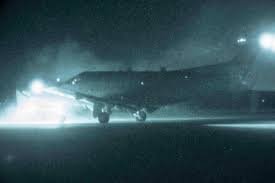
High-Stakes in the Skies: Austrian Air Force Intercepts US Military Aircraft
In a series of rapid-response maneuvers, the Austrian Air Force recently scrambled its elite Eurofighter Typhoon jets on two consecutive days to intercept United States military aircraft. These incidents, which occurred on May 10 and 11, highlight the delicate balance between international military cooperation and the strict adherence to national sovereignty.
The aircraft in question were modified PC-12 turboprops, known in the U.S. military as U-28s. These specialized planes are primarily utilized for scouting and signals intelligence, making their unannounced presence in sensitive airspace a matter of immediate national security.
The Timeline of the Interceptions
While initial reports in German-language media suggested illegal incursions, the reality was more nuanced, involving a mix of administrative lapses and strict verification protocols:
- May 10: The U.S. Air Force requested an overflight permit but did not utilize it. Later that day, two unannounced aircraft approached the border. The Austrian Air Force responded immediately, forcing the aircraft to turn back before entering Austrian airspace.
- May 11: A new permit was filed and used. However, the Austrian military initiated a “Priority A intercept”—the highest urgency level in their nomenclature—to manually verify that the planes overhead matched the approved documentation.
As military spokesperson Michael Bauer noted, “Some things you have to see for yourself,” emphasizing that paperwork is no substitute for visual confirmation when national neutrality is at stake.
Why Neutrality Matters for Austria
Unlike many of its neighbors, Austria is not a member of the NATO alliance. Its perpetual neutrality is not just a policy but is enshrined in its constitution. This means that any transit by foreign militaries, whether by land or air, requires explicit prior approval.
This stance has taken on renewed political significance. Vice Chancellor Andreas Babler has voiced a desire for Austria to remain distanced from volatile international conflicts, asserting that the nation seeks no involvement in the “politics of chaos” often associated with foreign military interventions.
A History of Vigilance
This is not the first time the Austrian Air Force has had to act as a strict gatekeeper. A notable precedent occurred in October 2002, when the U.S. attempted to move two F-117A Nighthawk stealth attack aircraft through Austrian airspace by only declaring the accompanying tanker aircraft. Austrian Draken jets quickly identified the undeclared stealth bombers, leading to a formal diplomatic complaint from Vienna.
Closing the Gap: Diplomatic Resolutions
Following the recent events, U.S. European Command clarified that the confusion stemmed from an administrative error in the overflight clearance paperwork. They have reaffirmed their commitment to complying with all Austrian laws and procedures.
Given Austria’s strategic geography—acting as a bridge between major NATO allies like Germany and Italy—it remains a prime transit route. However, as these recent intercepts prove, the Austrian Air Force remains vigilant in ensuring that its skies remain sovereign and its neutrality absolute.
For more information on how air sovereignty works in Europe, you can explore the Eurofighter Typhoon’s role in air policing across the continent.



