
The Escalation of Force in the Alex Pretti Shooting: A CNN Analysis
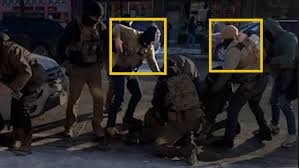
The moments leading up to the death of Alex Pretti in Minneapolis on Saturday were marked by a rapid and concerning escalation of force by two federal agents, according to a detailed analysis of video footage conducted by CNN. The incident raises serious questions about the training and protocols of federal law enforcement operating in urban protest environments.
From Restraint to Deadly Force
While other agents were focused on restraining Pretti and securing a handgun found in his waistband, video evidence reveals that two agents significantly escalated the confrontation. This escalation included the use of pepper spray, repeated strikes to Pretti’s face and head, and ultimately, the discharge of firearms – even after he was disarmed and on the ground.
A Lack of De-escalation Tactics
Experts suggest that the actions of these agents highlight a dangerous trend: the deployment of federal officers lacking the necessary training to effectively manage protests in complex urban settings. Deborah Fleischaker, former ICE chief of staff, emphasized the importance of de-escalation, stating, “Law enforcement should always be looking to defuse the situation… Instead of doing that, they’re leaning into the ways that they can escalate.”
The Sequence of Events
CNN’s analysis shows one agent firing multiple rounds at Pretti’s body after a brief pause and as other officers had already retreated. The two agents involved have been identified as the shooters in an initial Department of Homeland Security (DHS) report and have been placed on administrative leave pending investigation.
Pre-Shooting Interactions
Prior to the shooting, video footage shows immigration agents interacting with bystanders. A witness, Nilson Barahona, reported that agents were attempting to apprehend an individual who had sought refuge in a nearby donut shop. The situation quickly became tense as agents detained an observer while others protested and recorded the encounter.
The Confrontation with Pretti
The two agents at the center of the incident were observed pacing and exhibiting aggressive behavior. Pretti, an ICU nurse and lawful gun owner with a permit, was attempting to direct traffic and protect a woman when he became involved in the escalating situation. He repeatedly asked an agent not to push protesters into traffic. The agent then turned on Pretti, pepper-spraying him in the face after a physical altercation.
The Use of Deadly Force: A Critical Examination
The DHS report indicates that officers repeatedly shouted, “He’s got a gun!” before opening fire. While Pretti did possess a handgun in his waistband, there is no evidence he brandished the weapon. Law enforcement experts, like Marc Brown, who trained immigration officers at the Federal Law Enforcement Training Center, point out that simply seeing a weapon doesn’t automatically justify the use of deadly force. “The key is the hands,” Brown stated. “If the hands are occupied on the ground… the weapon is a concern, but not necessarily a problem or threat.”
The pattern of shots fired has led some experts to suggest the possibility of “contagious fire,” where officers fire in response to the sound of other gunfire. Eric Dlugolenski, a former police sergeant, noted that officers in simulations are significantly more likely to fire when hearing other gunshots.
Delayed Medical Aid and Questionable Tactics
Notably, officers did not approach Pretti’s body for approximately 25 seconds after the shooting. The DHS report confirms that personnel eventually provided medical aid, but the delay raises further concerns. Experts also question why agents engaged Pretti in the first place and why so many shots were fired.
The Role of Federal Agents in Urban Policing
The incident has sparked debate about the appropriate role of federal agents in local policing. Experts emphasize that Border Patrol and Customs and Border Protection officers are not typically trained for the type of roving patrols seen in Minneapolis. Former ICE chief of staff Fleischaker criticized the use of deadly force and linked it to a “maximalist approach to power” adopted during the Trump administration.
You can find more information about federal law enforcement training at the Federal Law Enforcement Training Centers (FLETC) website.



