
A Lifetime Stolen: The Shocking Reality of Modern Slavery
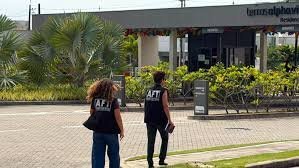
Imagine entering a home at the age of seven, full of childhood innocence, and only regaining your freedom at sixty-two. For a woman we will call Maria, this wasn’t a nightmare—it was her entire life. In a case that has shaken the city of Fortaleza and the nation of Brazil, Maria was recently rescued by the Labor Prosecutor’s Office after spending over 55 years in slave-like conditions.
Maria’s story is a harrowing reminder that modern slavery still exists in the shadows of respectable neighborhoods, hidden behind closed doors and the facade of “family care.”
Three Generations of Exploitation
Maria’s ordeal was not the result of a single employer’s cruelty, but a systemic cycle of abuse spanning three generations of the same family. For over half a century, she served as a live-in domestic worker, performing grueling tasks without a single cent in wages or a day of vacation.
Her daily routine remained unchanged for decades: waking up at 4:30 a.m. to prepare breakfast and get children ready for school. The psychological toll was as devastating as the physical labor:
- n
- Total Isolation: She had no friends, no bank account, and no contact with her own relatives.
- Educational Deprivation: Maria was never taught to read or write, leaving her unable to navigate the world outside.
- Psychological Bondage: Because she was provided with basic food, clothing, and shelter, she was led to believe she was being “paid” for her labor.
The Symbolism of the “Brasil” Family
In a cruel twist of irony, the family that held Maria in bondage carries the surname Brasil. For experts, this is a powerful symbol of the country’s historical legacy. Brazil was the last country in the Americas to abolish slavery in 1888, and specialists argue that the exploitation of poor, often Black, women in domestic roles is a direct inheritance of that colonial past.
The abuse extended beyond unpaid labor. Prosecutors suspect the family committed fraud by appropriating Maria’s Bolsa Família payments—a government social welfare program designed to lift the poorest citizens out of poverty.
The Path to Justice and the Complexity of Recovery
Following the intervention of the Labor Prosecutor’s Office, an agreement was reached. The current employers have agreed to provide Maria with:
- n
- A fully furnished and equipped apartment valued at $30,000.
- An additional $10,000 in financial compensation.
However, the rescue is not a simple “happy ending.” In a controversial decision, authorities are allowing Maria to remain with her employers temporarily. Why? Because after 55 years of total dependence, Maria has no autonomy. She is terrified of the outside world and has no support network.
As Amnesty International often highlights in human rights cases, the transition from servitude to freedom requires a structured process of social reintegration to prevent further psychological trauma.
Looking Forward: A Call for Awareness
Maria’s case came to light through an anonymous tip, proving that public awareness is the strongest weapon against domestic abuse. While stories like those of Madalena Gordiano—another survivor who found joy in Zumba and the ocean after her rescue—offer hope, they also highlight how many women remain trapped in silence.
The disappearance of the “maid’s room'” in modern Brazilian architecture is a step forward, but the mental divide between those who serve and those who are served remains. Maria’s journey toward a dignified, independent life has only just begun, reminding us all that freedom is not just the absence of chains, but the presence of opportunity and dignity.



