The Silent Crisis: What Bangladesh’s Measles Outbreak Teaches the World About Vaccination
The Deadly Wake-Up Call: Bangladesh’s Struggle With Measles
While many parts of the world consider measles a disease of the past, a devastating outbreak in Bangladesh is serving as a grim reminder of how fragile public health can be. With over 1,100 lives lost—the vast majority being children under five—this crisis is more than just a local tragedy; it is a stark warning to every nation about the dangers of declining immunization rates.
According to the World Health Organization (WHO), Bangladesh has reported a staggering 202,000 suspected cases since mid-March, the highest number recorded by any country this year. The situation underscores a critical truth: when vaccination coverage slips, the most vulnerable pay the ultimate price.
The Breaking Point: Why Vaccination Rates Plummeted
For years, Bangladesh was viewed as a global model for successful immunization. However, a perfect storm of political instability and systemic failure led to a collapse in coverage. The key factors include:
- n
- Political Turmoil: Protests and the fall of the long-term government in 2025 disrupted essential health services.
- Labor Strikes: Health worker strikes led to delayed vaccine orders and a breakdown in routine administration.
- Data Inaccuracy: Incomplete records left millions of children “invisible” to the system, making it impossible to track who was actually protected.
- Logistical Barriers: In remote regions like Sylhet, families reported that health workers only arrived after a tragedy had already occurred.
The Human Cost of a Preventable Disease
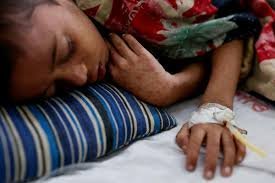
Behind the statistics are heartbreaking stories. In the Sylhet district, two-year-old Arman Hussain died just 24 hours after hospitalization because he was unvaccinated. His father, Amin Mija, shared the agonizing detail that health workers only reached their remote village after his son was buried.
Similarly, nine-month-old Labiba Akter passed away in June. Despite emergency programs lowering the vaccination age to six months, her family was never informed, leaving her defenseless against the highly contagious virus.
A Global Trend: Access vs. Skepticism
The outbreak in Bangladesh highlights a contrasting global struggle with vaccines. In wealthier nations, the rise in measles cases is often fueled by vaccine skepticism and misinformation promoted by public figures. In Bangladesh, however, the obstacle is not a lack of will, but a lack of access and information.
Experts argue that regardless of the cause, the result is the same: the loss of herd immunity. The WHO emphasizes that a minimum vaccination coverage of 95% is required to prevent outbreaks. In 2025, Bangladesh’s coverage dropped to 90% for the first dose and 86% for the second, opening the door for the virus to ravage the population.
The Path Toward Recovery
The government has since launched an urgent campaign to reach 3.4 million missed children. However, challenges remain, including a shortage of health workers and a significant number of unregistered children. Health specialists are now urging the expansion of programs to include children over five, who currently account for a third of all cases.
As UNICEF and the WHO continue to monitor the situation, the lesson for the rest of the world is clear: preventing an epidemic through consistent vaccination is infinitely cheaper, safer, and more humane than trying to contain one once it has already begun.
📰 You May Also Like