Noah Wyle on ‘The Pitt’ and the State of Healthcare
Noah Wyle, renowned for his long-standing role as Dr. John Carter in the iconic medical drama ‘ER,’ is once again immersed in the world of emergency medicine with HBO Max’s critically acclaimed series, ‘The Pitt.’ The show recently garnered attention with a spotlight event in London, coinciding with the U.K. and Ireland launch of HBO Max on March 26th. The premiere episode was screened, followed by a fascinating discussion featuring Wyle and HBO/HBO Max chief Casey Bloys.
‘The Pitt’: A Realistic Portrayal of Emergency Care
Created by R. Scott Gemmill, ‘The Pitt’ follows Dr. Michael “Robby” Robinavitch (played by Wyle) as he navigates the challenges of an understaffed and underfunded emergency room in Pittsburgh. The series has quickly gained a reputation for its strikingly accurate depiction of the realities faced by healthcare workers, often mirroring current events in the medical field. This commitment to realism sets it apart and resonates deeply with audiences.
Wyle shared his hope that the series would resonate with U.K. audiences despite the differences between the U.S. and U.K. healthcare systems. He acknowledged that the frustrations experienced by healthcare professionals are universal, albeit stemming from different sources. He contrasted the U.S. system, heavily influenced by insurance companies and algorithms, with the U.K.’s National Health Service (NHS), praising the NHS’s commitment to comprehensive, publicly funded care.
“Our system at the moment is laden with the insurance companies being the intermediary … and care being predicated by the algorithm that the insurance company dictates. So it’s really become a profit-driven, quality-of-care-diminishing system.” – Noah Wyle
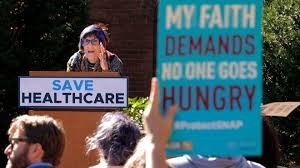
Advocating for Universal Healthcare
Wyle didn’t shy away from expressing his personal belief in the need for a national healthcare service in the United States, advocating for universal coverage for all citizens. This stance underscores his commitment to using his platform to raise awareness about critical social issues.
Behind the Scenes: Immersive Storytelling
Wyle described the show’s unique filming style, emphasizing its immersive quality. “Everything is geared toward it being a voyeuristic experience for the viewer, kind of analogous to being in the back seat of a patrol car going on a ride-along, or being embedded with a combat unit in battle,” he explained. The production team employs a kinetic, 360-degree shooting style, creating a sense of immediacy and realism that draws viewers into the heart of the emergency room. He likened the experience to live theatre, highlighting the demanding yet rewarding nature of the work.
He also noted the show’s success in finding compelling narratives within the confines of a single day, focusing on the small, impactful moments in the lives of both patients and staff. This approach allows for nuanced character development and a sustained level of engagement.
Season Three and a Real-Life Medical Moment
The series has already been renewed for a third season, and Wyle is currently involved in writing character arcs. He described the challenge of crafting compelling storylines within the show’s unique timeframe – 15 hours representing a single day – requiring a focus on subtle shifts and impactful moments.
In a remarkable turn of events, Wyle’s years of portraying a doctor proved useful off-screen at the Critics Choice Awards. He assisted producer Michelle Wong after she suffered a head injury, providing immediate care until medical professionals arrived. He jokingly referred to it as a moment of “delusion,” but it highlighted the lasting impact of his role and his ingrained medical instincts.
Awards and Recognition
Season one of ‘The Pitt’ achieved significant critical acclaim, winning five Emmys, including awards for best drama series, best actor (Wyle), and best supporting actress (Katherine LaNasa). The show continues to push boundaries and spark important conversations about healthcare and the human condition.
You can learn more about the challenges facing healthcare workers at organizations like The American Hospital Association.