The Irony of Optimization: When Health Tracking Wasn’t Enough
Conno Christou was the definition of a “health optimizer.” At 35, the serial founder tracked everything: sleep via a Whoop band, recovery with an Oura ring, and nearly 100 biomarkers through annual bloodwork. He followed the strict longevity protocols of experts like Peter Attia, ensuring his circadian rhythms and protein intake were perfectly dialed in. In 2025, his health reports were flawless.
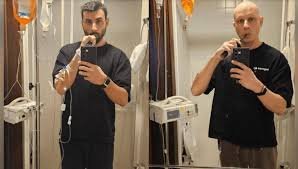
However, life rarely follows a spreadsheet. After a routine workout, an unexpected swelling in his arm led to a discovery that changed everything. A pre-op exam for blood clots revealed an 11-by-11-by-8 centimeter mass behind his sternum. The diagnosis was devastating: an aggressive form of non-Hodgkin’s lymphoma.
This rare cancer, affecting roughly one in 420,000 people, was the result of a random genetic mutation—completely unrelated to his diet, stress levels, or lifestyle. In a twist of “lucky unluckiness,” the tumor was found just three weeks before it would have reached stage four.
The Founder’s Approach to Survival: Seeking the Truth in Data
Faced with a life-threatening diagnosis, Christou didn’t just play the role of the patient; he took the wheel. When his first oncologist suggested a lighter chemotherapy regimen with a 60% success rate, Christou’s intuition as a founder kicked in. He sought a second opinion, which recommended a far more aggressive, continuous in-hospital infusion with an 85% success rate.
To eliminate doubt, Christou didn’t stop at two opinions. He leveraged his professional network to gather 12 different medical opinions from hematologists and oncologists globally. The result? Eleven of the twelve experts voted for the more aggressive path. He chose the data-backed route.
A Marathon of Sprints: Managing Treatment with Tech
Christou treated his chemotherapy like building a company—a series of high-intensity sprints. To manage the grueling process, he utilized a sophisticated tech stack:
- n
- Wearables: Using his Whoop band to predict when his immune system would bottom out, often before physical symptoms appeared.
- Symptom Journaling: Voice transcriptions of every side effect and medication shift.
- Psychological Focus: A rigid commitment to sleep, nutrition, and a refusal to ask “why me?”
How AI Became the Ultimate Medical Copilot
While medical professionals provided the treatment, Christou used Claude AI to synthesize the vast body of medical literature. He didn’t use AI to replace his doctors, but to help him ask the right questions.
The most critical moment came at the end of his treatment. A PET scan returned an ambiguous result, leading his oncologist to suggest radiotherapy near his heart and lungs. By feeding his MRI and PET scans into the AI, Christou discovered a known but rare phenomenon called “thymus rebound.”
In patients under 40 recovering from this specific non-Hodgkin’s lymphoma, the thymus gland can reactivate, mimicking the appearance of active disease on a scan. The AI estimated a 90% probability that this was the case. After seeking more opinions, a fourth doctor confirmed the AI’s lead: there was no active disease, and the dangerous radiotherapy was avoided.
A New Perspective on Life and Medicine
Today, Christou is reflecting on the gaps in the current healthcare system. From seeing nurses overwhelmed by administrative tasks to the “one size fits all” approach to chemotherapy, he believes we are on the verge of a medical revolution. Through his company, Keragon, he continues to explore how AI can automate medical administration to let doctors focus on actual care.
Beyond the tech, the experience taught him the value of the present. He now prioritizes Sundays off and the simple joy of spending time with friends and his dog. As he puts it, the ability for AI to empower patients isn’t a futuristic dream—it is happening today.