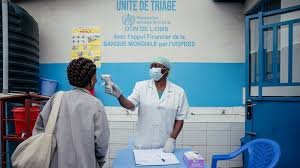
Ebola Outbreak in Africa: WHO Raises Risk Level to ‘Very High’ in DRC
The health landscape in Africa is facing a critical challenge as the World Health Organization (WHO) issues a stark warning regarding the current Ebola outbreak in the eastern Democratic Republic of the Congo (DRC). In a recent press briefing, WHO Director-General Dr. Tedros Adhanom Ghebreyesus announced that the risk assessment at the national level has been upgraded from “high” to “very high.”
While the global risk remains low, the regional situation is precarious, with the risk level remaining “high.” The urgency of the situation is underscored by the rapid spread of the virus in unstable regions, making containment a race against time.
The Current Toll: Numbers and Realities
The scale of the epidemic is alarming. According to official reports shared via X (formerly Twitter) by the WHO, the statistics paint a worrying picture:
- n
- Suspected Cases: Nearly 750 individuals.
- Suspected Deaths: 177 fatalities.
- Confirmed Cases: At least 82 confirmed infections and 7 deaths.
However, Dr. Tedros emphasized that these numbers likely only scratch the surface, stating, “we know the epidemic in the DRC is much larger” than the confirmed data suggests. Meanwhile, the situation in neighboring Uganda is currently described as “stable,” despite a few imported cases from the DRC.
Security Crisis: A Barrier to Healthcare
One of the most harrowing aspects of this health crisis in Africa is that the epicenter is located in the provinces of North Kivu and Ituri. These areas are plagued by ongoing armed conflict and a severe displacement crisis, creating a “highly insecure” environment for medical teams.
The volatility of the region was highlighted by a recent security incident in Ituri, where medical tents and essential supplies were set on fire. Dr. Anne Ancia, the WHO representative in the DRC, noted that such attacks significantly jeopardize response operations. The lack of trust within local communities and low contact tracing rates—particularly in the city of Bunia—continue to hinder the efforts to stop the virus.
Global Impact: The Case of Dr. Peter Stafford
The Ebola outbreak has already crossed borders, affecting international medical personnel. Dr. Peter Stafford, an American physician who was treating patients in the eastern DRC, tested positive for the virus.
Dr. Stafford was evacuated to the Charité University Hospital in Berlin, where he is currently receiving treatment in an isolation ward. Although he is severely weakened, he does not currently require intensive care. His family is also under quarantine as high-risk contacts, though they remain symptom-free.
The Path Forward
Combating Ebola in such a complex environment requires more than just medical supplies; it requires peace and community trust. The World Health Organization and partners continue to push for better security to allow healthcare workers to reach the most vulnerable populations.
For more information on how to prevent the spread of viral hemorrhagic fevers, visit the Centers for Disease Control and Prevention (CDC).