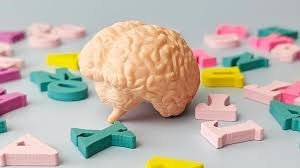
Unlock a Younger Mind: How Language Learning Fights Brain Aging
Have you ever wondered if picking up a new language is about more than just travel or career advancement? According to groundbreaking research presented at the Federation of European Neuroscience Societies (FENS) Forum 2026, the answer is a resounding yes. Science now suggests that the act of language learning could actually keep your brain biologically younger.
Our brains rely on a complex web of billions of nerve cells. As we age, these connections naturally weaken, which often leads to slower cognitive processing and memory decline. However, multilingualism appears to act as a powerful shield, offsetting these age-related changes and enhancing cognitive resilience.
The Science Behind the “Brain Aging Clock”
Led by Dr. Lucia Amoruso from the Basque Center on Cognition, Brain and Language, an international team of researchers developed an innovative “brain aging clock.” By utilizing magnetoencephalography (MEG)—a technique that measures the magnetic fields produced by brain activity—and leveraging Artificial Intelligence, the team was able to map typical brain connectivity across different life stages.
By comparing the actual chronological age of participants with their estimated “brain age,” the results were nothing short of striking.
The Multilingual Advantage: By the Numbers
The study revealed a direct correlation between the number of languages spoken and the perceived youthfulness of the brain. The more languages a person mastered, the more significant the age gap became:
- n
- Bilinguals (2 languages): Brains appeared approximately 6 years younger than those of monolinguals.
- Trilinguals (3 languages): Brains appeared roughly 7 years younger.
- Polyglots (4 languages): The difference jumped to a staggering 13 years younger.
Depth Matters: Proficiency and Timing
It is not just about the number of languages on your resume. Dr. Amoruso emphasized that language experience exists on a gradient. The research indicates that higher proficiency and earlier acquisition of a second language are strongly associated with more delayed brain aging.
Essentially, the deeper your engagement with a language and the longer you have used it, the more your brain benefits. This suggests that the mental effort required to switch between different linguistic systems forces the brain to remain flexible and active.
Building Brain Resilience Against Dementia
The implications of this study go beyond general wellness. Researchers are now investigating whether these patterns can provide protection against neurodegenerative diseases, such as Alzheimer’s disease. The concept of “cognitive reserve” suggests that the brain can find alternative ways to function when damaged, and language learning is a prime way to build this reserve.
Professor Christina Dalla, from the National and Kapodistrian University of Athens, notes that while lifestyle factors like diet and exercise are crucial, effortful learning—specifically the kind involved in mastering a new tongue—is a key driver of brain health.
Start Today: It’s Never Too Late
Whether you are a student or a retiree, the benefits of language learning are universal. From enhancing your social circle to boosting your professional opportunities and protecting your cognitive health, the rewards are immense.
If you’re looking for ways to keep your mind sharp, consider exploring resources from the National Institutes of Health (NIH) on cognitive health or downloading a language app today. Your brain will thank you for it in the years to come.