A New Frontier in the Fight Against Neurodegenerative Diseases
For millions of people worldwide, Parkinson’s disease and Amyotrophic Lateral Sclerosis (ALS) represent devastating challenges. These conditions are characterized by the accumulation of misfolded proteins that clump together, disrupting brain function and destroying neurons. However, a groundbreaking study from Washington University in St. Louis is offering new hope for future treatments.
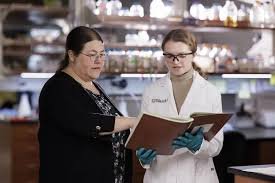
Led by Meredith Jackrel, an associate professor of chemistry, a team of researchers has developed an innovative method to rapidly produce and screen a specific class of enzymes known as disaggregases. These biological “cleaners” have the unique ability to break down the toxic protein aggregates associated with these debilitating diseases.
The Power of Hsp104: Nature’s Protein Dissolver
The research focuses on Hsp104, a disaggregase enzyme naturally found in yeast. In nature, yeast uses this enzyme to protect itself from heat stress, but scientists discovered it also possesses the power to dissolve harmful proteins found in humans, such as:
- n
- α-synuclein: The primary protein that accumulates in the brains of those suffering from Parkinson’s disease.
- TDP-43: A misfolded protein linked to ALS and various forms of dementia, including Alzheimer’s.
According to Professor Jackrel, the magic of Hsp104 isn’t just in breaking down these clumps, but in its potential to help proteins refold, which could potentially restore healthy cellular functions.
Why This Discovery is a Game-Changer
While disaggregases have always shown promise, the process of identifying the most effective versions was historically slow and tedious. Previously, researchers had to manually pick yeast colonies using toothpicks—a painstaking process that limited analysis to a few hundred variants at a time.
The team’s new approach transforms this process through deep sequencing. By creating a vast “library” of tens of millions of Hsp104 mutations, the researchers can now analyze the entire population simultaneously. This allows them to pinpoint the most potent versions of the enzyme with unprecedented speed and precision.
The Path to Future Therapies
Although this discovery is a major scientific leap, the journey from the lab to the pharmacy takes time. The researchers acknowledge that it will take years of further fine-tuning before Hsp104 can be developed into a viable human therapy. However, the ability to target TDP-43 and α-synuclein more effectively opens a critical door for pharmaceutical companies and medical researchers.
As published in the journal Molecular Cell, this high-throughput screening approach provides a scalable blueprint for combating neurodegeneration, bringing us one step closer to reversing the buildup of proteins that define Parkinson’s disease and ALS.
Key Takeaways from the Study:
- Rapid Screening: New method analyzes millions of enzyme variations instead of hundreds.
- Dual Action: The Hsp104 enzyme can both dissolve protein clumps and help them refold.
- Broad Impact: Potential applications for Parkinson’s, ALS, and some forms of Alzheimer’s.