Torvill and Dean: A Legacy of Ice Dancing Glory and Controversy
Jayne Torvill and Christopher Dean etched their names into Olympic history with a performance that captivated the world in 1984. However, their attempt to recapture that magic a decade later proved to be a story of both brilliance and bitter disappointment. This is the story of a partnership that defined a generation of ice dancing.
The Golden Moment: Sarajevo 1984
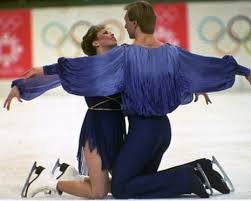
Sarajevo, February 15th, 1984. The Zetra Stadium was filled with anticipation as Jayne Torvill and Christopher Dean took to the ice. Their interpretation of Ravel’s Boléro was nothing short of mesmerizing. From the opening pose – kneeling, swaying hypnotically to the music – to the innovative lifts and intricate choreography, the performance held the audience spellbound.
The judges were equally impressed, awarding an unprecedented 12 out of 18 possible perfect 6.0s. The routine, though criticized by some for its initial stillness, was a masterclass in artistic expression. Dean’s daring moves, including a 180-degree split and a complex lift of Torvill, showcased their athleticism and innovation. As John Mullin noted, the performance was so captivating that its four-minute duration felt far too short.
The Comeback Attempt: Lillehammer 1994
Ten years later, at the 1994 Winter Olympics in Lillehammer, Torvill and Dean attempted a comeback. However, their return was met with skepticism from the press, who labelled them “too old, too fat, too slow.” Despite the criticism, they delivered a performance that initially thrilled the audience of 6,000 and the 23 million viewers watching at home in Britain.
The highlight of their routine was a spectacular lift where Dean whirled Torvill over his head, culminating in a somersault onto the ice. However, this very move proved to be their undoing. The judges penalized them for an “acrobatic movement not allowed under our new rules,” a jump over Dean’s head that violated post-1992 Olympic regulations.
They ultimately secured a bronze medal, finishing behind the Russian pairs Oksana Gritschuk and Yevgeny Platov, and Maya Usova and Alexander Zhulin. The decision sparked outrage in Britain, with many believing they had been unfairly robbed of gold. A Teletext poll showed 98% of 13,000 callers felt the same.
Controversy and Criticism
The judging sparked a fierce debate. Some, like Gill Trenary, believed Torvill and Dean were the true champions. However, others, including German judge Ingrid Reetz, defended the scoring. The French press was particularly harsh, with Jean Christophe Papillon describing Torvill as “chubby cheeked and bloated” and the routine as “worn-out and old fashioned.” Alain Billouin of L’Equipe noted a perceived decline in Torvill’s “vivacity and speed.”
Even Dean himself offered a less-than-glowing assessment of Torvill’s physical condition, stating she had undergone a “change in shape.” Despite the controversy, the event drew the largest British television audience for a sporting event since the 1990 World Cup, demonstrating the enduring popularity of the duo. A quirky detail emerged – Dean was wearing the same type of Marks & Spencer underpants he wore in Sarajevo!
A Lasting Legacy
Torvill and Dean’s impact on ice dancing is undeniable. They revolutionized the sport with their artistry, innovation, and emotional connection. While their 1994 comeback was marred by controversy, their 1984 Olympic victory remains one of the most iconic moments in British sporting history. Their story is a testament to the power of partnership, the pursuit of excellence, and the enduring magic of ice dancing. You can learn more about the history of ice dancing at the International Skating Union website.