Paralympics Medal Count: China’s Dominance and Rise to the Top
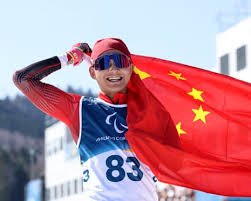
China’s sporting prowess at the Winter Paralympics is nothing short of remarkable. Having secured a single medal eight years ago, they now stand as the undisputed leaders, a testament to a focused and ambitious program. With two days of competition remaining at the Milano Cortina Games, China’s position at the top of the Paralympics medal count is virtually assured.
As of Friday’s close of play, China boasts an impressive total of 33 medals, surpassing the combined tally of the USA and Italy, their closest competitors. Their success spans across multiple disciplines, having clinched gold in four of the six sports offered – cross-country skiing, curling, snowboarding, and biathlon – and are strong contenders in para-ice hockey as well.
From Zero to Hero: A Striking Transformation
This dominance is particularly striking considering China’s relatively recent entry into the Winter Paralympics scene. At the Pyeongchang Games, they secured only one medal: a gold in mixed team curling. Three members of that victorious team are competing in Milano Cortina, and a fourth, Wang Meng, has already added another gold to her collection, winning the inaugural mixed doubles curling event alongside Yang Jinqiao.
“I’m very, very proud, very, very honoured, and also very grateful,” Wang Meng expressed after a hard-fought 9-6 victory over Korea in a tie-break end. “I’m so grateful to so many people who have helped us along the way, and [to be] finally standing on this podium.”
Investing in Infrastructure and Talent
Much of the support Wang Meng acknowledges is directed towards the National Ice Sports Arena for People with Impairments in Beijing. Opened in 2020, this state-of-the-art facility, covering over 13,000 square meters, serves as a hub for both elite athletes and individuals with disabilities seeking to explore para-sport. The arena, resembling a pair of wings, was a central venue during the Beijing Games and is one of 40 similar facilities built nationwide.
A Paralympic executive remarked on their surprise at witnessing China “come from nowhere” to top the medal table in Beijing, securing 61 medals – more than a quarter of the total. However, this success wasn’t entirely unexpected, mirroring a similar transformation in the Summer Paralympics 16 years prior at the Athens Games, a position they’ve maintained ever since.
A Grassroots Approach and National Scale
China’s success isn’t solely about infrastructure; it’s also about a comprehensive, grassroots approach. The China Disabled People’s Federation launched a ‘winter sports season’ in 2016, which expanded to reach 31 regions and, according to official estimates, 300 million people by the time of the Beijing Games. This widespread engagement allowed the Chinese National Paralympic Committee to select from a pool of over 1,000 para-athletes in 2021, a significant increase from the 50 available when the program began.
This ambitious undertaking requires substantial investment, and China has demonstrably prioritized its winter para-sport program. Prior to the Beijing Games, a recruiting drive brought in leading winter para-sport coaches from around the world. One European coach recounts being tasked with teaching 200 young people to ski, highlighting the program’s commitment to building a world-leading system.
The Advantage of Scale
Beyond investment and infrastructure, China possesses a significant natural advantage: its population. With approximately 15% of the global population living with some form of disability, China’s 1.4 billion people represent a potential pool of over 200 million para-athletes. Even a small percentage of this population translates to a vast talent base.
As Chinese sport expert Mark Dreyer notes, “China’s population means it can field many elite athletes, and that only the most competitive Chinese athletes get selected. If there’s a Chinese athlete in your race, there’s a good chance they will finish on the podium.”
The Next Generation: Yang Jinqiao
The emergence of athletes like Yang Jinqiao, Wang Meng’s 24-year-old partner, exemplifies China’s progress. Jinqiao, the youngest curler in the mixed doubles competition, demonstrated remarkable composure and skill, securing crucial victories against Great Britain and Korea. He began his curling career in 2018, inspired by China’s success in Pyeongchang.
“When I saw China won the gold of wheelchair curling in Pyeongchang, I was so excited and proud of them,” Yang Jinqiao shared. Wang Meng playfully responded, “So you were inspired by me? You took me as a role model?” Yang smiled and affirmed, “Yes. For sure.”