Dejounte Murray: The Flex, The Fallout, and Team Dynamics in the NBA
The NBA is a league built on skill, athleticism, and a complex set of unwritten rules. Recently, a moment involving Dejounte Murray of the New Orleans Pelicans ignited a discussion about these very rules, team dynamics, and the response – or lack thereof – from opposing players.
The Play and the Reaction
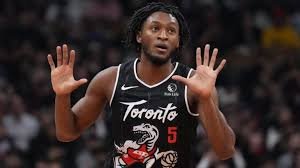
During a game against the Toronto Raptors, Dejounte Murray found himself in a one-on-one situation against Jamal Sheed, a respected defensive player. Murray executed a series of impressive moves, culminating in a clutch three-pointer. What followed was arguably more talked about than the shot itself: Murray stepped over Sheed and flexed, a clear display of confidence and, some would argue, disrespect.
The surprising aspect wasn’t Murray’s skill, but the reaction (or lack thereof) from the Raptors. No players immediately retaliated or confronted Murray. While teammate Emmanuel Quickly briefly spoke with him, the moment passed without a significant on-court response.
A Question of Team Loyalty and Respect
This lack of response sparked debate. Should a teammate have stepped in to defend Sheed? Is it a sign of a ‘soft’ team? Many drew comparisons to past incidents, such as the altercation between Isaiah Stewart and Miles Bridges, where a more physical response occurred. The question isn’t necessarily about escalating to violence, but about demonstrating support for a teammate who was seemingly ‘disrespected’.
The NBA Brotherhood
As one analyst pointed out, NBA players spend more time with their teammates than they do with their families. This creates a unique bond, a sense of brotherhood that should, in theory, compel players to defend one another. The fear of repercussions, such as fines or suspensions, is understandable, but the expectation is that a teammate will at least show solidarity.
The Raptors’ Identity
The incident has led to scrutiny of the Raptors’ overall identity. While they enjoyed a strong start to the season, questions are being raised about their ceiling and their willingness to stand up for each other. The team’s lack of consistent perimeter shooting, rim protection, and rebounding further contribute to these concerns.
A League-Wide Perspective
The discussion extends beyond the Raptors. The incident highlights a broader trend in the NBA where players are hesitant to engage in physical confrontations, fearing injury or suspension. However, the unwritten rules of the game still demand a certain level of respect and a willingness to defend one’s teammates.
Interestingly, James Johnson was cited as a player universally respected for his toughness within the league, demonstrating the value placed on those who are willing to stand their ground. The incident with Dejounte Murray serves as a reminder that while the game has evolved, the importance of team loyalty and respect remains paramount.
You can find more insights on NBA dynamics at NBA.com and ESPN’s NBA section.