David-Alexandre Beauregard: A Story of Courage and Determination
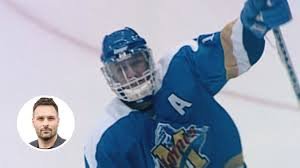
MONTREAL – Back in the summer of 1995, securing one of the 22 available spots at Les 4 Glaces complex in Brossard required arriving early. For David-Alexandre Beauregard, it was a necessity. He desperately needed free ice time – as much as possible. The sessions attracted players of all skill levels, but the calibre didn’t matter to the LHJMQ forward. He wasn’t seeking competition; he was seeking a way to regain his confidence and find his bearings.
Just months prior, on October 16, 1994, while playing for the Saint-Hyacinthe Laser, Beauregard lost the use of his left eye due to an accidental stick incident involving Xavier Delisle of the Granby Bisons. The incident garnered significant media attention, as did Beauregard’s improbable attempt to return to the game just three months later.
A Setback That Defined a Career
“I managed to finish the year, but I wasn’t even close to being the player I once was,” Beauregard admitted. He struggled to accurately judge distances to the boards, opponents, or the net. Fearful of what might be coming from his left side, he constantly turned his head in that direction. To rediscover his scoring touch, he needed repetition – a lot of it.
“I just wanted to try and get my bearings back as quickly as possible, because I’ve always loved scoring goals. […] I told myself that if I wanted to play for a while longer, I had to somehow become the player I once was. I practiced incredibly hard that summer.”
Resilience and Return to Form
His dedication paid off. Beauregard went on to play two more full seasons, scoring his share of goals and cementing his place in LHJMQ history. So much so, that the league will be enshrining him in its Hall of Fame this September.
“I consider myself incredibly privileged and lucky that it worked out, because it could have easily gone either way,” the soon-to-be immortal shared with RDS.ca earlier this week. “My accident plays a big part in my induction, but it’s not the only factor. It’s about what I demonstrated afterward.”
Traded and Tested
Following his unfortunate incident, Beauregard was first traded from the Laser and the supportive community of Saint-Hyacinthe. New club owners and management viewed him as a distraction. He was then unexpectedly available in the 1995 expansion draft, where he was selected by the Moncton Alpines.
“They felt I was nearing the end of my career and there was too much media attention surrounding me. But it was beyond my control. It was the year of the NHL lockout, and my story had received a lot of coverage.
“I was deeply touched. I was sad because I had played my first two junior years with the Laser. I was attached to the team that had drafted me. Then, the accident happened. You experience it with the people who supported you, who followed you, and suddenly, you’re exposed in the expansion draft.”
A Valuable Asset
After being acquired by the Alpines, Beauregard quickly regained his form. Playing “30 to 35 minutes” per game under coach and GM Lucien DeBlois, who promised to make him “his guy,” Beauregard started scoring again – consistently. By Christmas, he was the league’s leading scorer.
With 34 goals in 41 games, the Alpines saw an opportunity to address their financial difficulties. They put Beauregard’s services up for sale. In an era where LHJMQ teams could trade players, the bidding war began.
“The club was going nowhere. Really nowhere, and there were offers for me.” The Hull Olympiques, Beauport Harfangs, and Granby Bisons all submitted serious bids, even the Laser attempted to bring him back. “I told Lucien: ‘Block them, I’m not going back there.’”
Ultimately, Hull secured Beauregard with a package of $100,000, a first-round pick, and Christian Daigle. “I can say that I hold at least one record – that of being the most expensive player ever sold in the history of the Quebec Major Junior Hockey League.”
A Legacy of Perseverance
Despite joining a powerful Olympiques team with aspirations of winning the Memorial Cup, Beauregard found himself on the third line. However, he still contributed six goals and six assists in 15 regular-season games, bringing his point total to 73 in 56 games – a career high in the LHJMQ.
Beauregard briefly played professionally, appearing in five games for the Kentucky Thoroughblades, the Sharks’ AHL affiliate, before being sidelined for the next 12. He was the only player on the team without an NHL contract after several prospects were demoted.
He returned to the LHJMQ at the invitation of Charles Henry, the Olympiques’ GM, hoping to help the team contend for another championship. He scored 14 goals in 17 games before being traded again to the Shawinigan Cataractes for Mathieu Descôteaux, as Christian Dubé, a top Rangers prospect, arrived.
It was with the Cataractes, after a Game 7 victory against Jean-Sébastien Giguère and the Halifax Mooseheads, that Beauregard concluded his LHJMQ career in 1997. “I cried a lot,” he recalled. “I had no idea what was going to happen next.”
What followed was 17 years of professional hockey across the United States and Europe, countless goals, and now, an induction into the LHJMQ Hall of Fame.
“I know my journey is different from other inductees. I didn’t reach the NHL. I had my accident, but I managed to return to the game and perform. That’s something they can’t take away from me,” said Beauregard, who will always consider himself a Laser.
“My greatest achievement isn’t my 17-season career, my stats, or my goals. I think it’s really about trying to play again. Everyone has their own way of leaving their mark. If I was able to show some people that it was possible to continue playing, so much the better. I’m not different from anyone else. I was just lucky enough to overcome that challenge in that way.”
©2026 Bell Média Tous droits réservés.