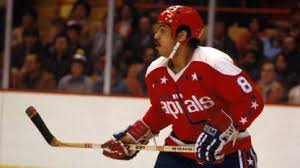
Bill Riley: A Trailblazing Legacy in Hockey
Bill Riley, best known as the third Black player to reach the National Hockey League (NHL) and one of the first Washington Capitals to proudly wear the number 8 – later popularized by Alex Ovechkin – passed away at the age of 75. However, Riley’s impact extended far beyond the ice. He was a mentor, a trailblazer, and a folk hero, particularly for those from the Canadian Maritimes.
Riley defied the odds of both geography and race, playing 139 NHL games and later excelling as a coach and general manager in the Quebec Maritimes Junior Hockey League. “He was a little bit of an iconic figure, growing up in Amherst (Nova Scotia) and making it to the NHL undrafted,” said Frantz Jean, the goalie coach for the Tampa Bay Lightning. “It’s already hard enough when you’re from the Maritimes to make it to the NHL, just the fact that he was a Black player made it even more impressive.”
Breaking Barriers in the NHL
Riley joined the NHL as the third Black player on December 26, 1974, alongside Mike Marson, during the Washington Capitals’ inaugural season. This milestone came 16 years after Willie O’Ree broke the color barrier, debuting with the Boston Bruins on January 18, 1958. Willie O’Ree’s impact on the NHL continues to inspire generations of players.
Riley never shied away from discussing the challenges he faced, both in the NHL and the minor leagues. He recounted instances of racial slurs and prejudice, particularly in the United States. “I went through a lot in the minors,” he shared with Color of Hockey in 2016. “I got called names down in the U.S., I didn’t even know what they meant. I had to ask another Black guy. They used to call me ‘Chitlin.’ I didn’t know what a chitlin was.”
A Career Beyond the NHL
Riley played 125 games with the Capitals from 1976-79 and 14 games for the Winnipeg Jets in 1979-80, accumulating 61 points (31 goals, 30 assists) over his five NHL seasons. The Washington Capitals released a statement expressing their deepest condolences to his family and loved ones, acknowledging his leadership, professionalism, and dedication.
His success continued in the minor leagues, where he amassed 304 points (147 goals, 157 assists) in 391 American Hockey League (AHL) games. He captained the New Brunswick Hawks to the AHL Calder Cup victory in 1982, demonstrating his leadership qualities.
Mentorship and Legacy
Riley’s influence extended to the next generation of hockey players and coaches. He served as coach and general manager of the Moncton Wildcats in their inaugural QMJHL season in 1996-97, and later hired Frantz Jean as their goalie coach. Jean, now a successful NHL coach with the Tampa Bay Lightning, credits Riley with providing him with a crucial opportunity.
“If I don’t get that opportunity, I don’t know if I am where I am today,” Jean stated. “Bill knew me. He didn’t flinch. I’m a year out of college… But he had enough faith in me and enough trust in who I am, and I always respected him for that. I’m a big believer in mentorship, and Bill was a fantastic mentor.”
Riley’s legacy is honored with a permanent display at Capital One Arena, recognizing the contributions of 11 Black players who have played for the Washington Capitals. He was also inducted into the Nova Scotia Sport Hall of Fame in 1998. His granddaughter, Kryshanda Green, honored him by wearing his number 8 during her college hockey career.
Bill Riley’s story is a testament to his resilience, leadership, and unwavering dedication to the sport of hockey. He will be remembered not only as a skilled player but as a true pioneer who paved the way for future generations.