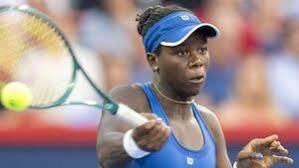
Arber Xhekaj: The Future of the Montreal Canadiens’ Defense?
Throughout this season, the Montreal Canadiens have found themselves in a recurring situation: alternating between Arber Xhekaj and Jayden Struble in the third-pair defensive role. This isn’t a simple case of situational adjustments; it’s a rotation that speaks volumes about the team’s evaluation process.
Typically, when a coaching staff identifies a clear winner in a positional battle, the competition concludes. The ongoing back-and-forth between Xhekaj and Struble suggests that neither player has consistently demonstrated the certainty needed to solidify the spot. However, the context of this evaluation has evolved significantly.
Head coach Martin St. Louis continues to prioritize player development as an ongoing process, and the organization acknowledges that improvement doesn’t necessarily halt after three seasons. Yet, the Canadiens’ competitive timeline has shifted. Montreal now boasts an established NHL defensive core, including players like Noah Dobson, Lane Hutson, Kaiden Guhle, Mike Matheson, and Alexandre Carrier (entering the final year of his contract). Prospects Adam Engström and David Reinbacher are also vying for NHL minutes.
This evolving landscape means the coaching staff can no longer justify using valuable NHL ice time for prolonged experimentation. Struble, under contract through the 2026-27 season with a manageable cap hit, provides Montreal with cost certainty in a depth role. Xhekaj, however, becomes a restricted free agent (RFA) this summer, forcing management to decide if he fits into the next phase of the team’s development or if his value should be capitalized on through a trade.
Decoding the Metrics: What Do the Numbers Say?
Advanced statistics offer insight into the coaching staff’s hesitation. Corsi, a metric measuring shot attempt differential, reveals that a percentage below 50 indicates opponents generate more shots during a player’s shifts. Xhekaj’s career average hovers around 47 percent. While his performance improves with offensive-zone starts and limited minutes, his shot share declined when his responsibilities increased during the 2023-24 season, with play predominantly occurring in Montreal’s defensive zone.
This season, his metrics have returned closer to his career average, but his ice time has dwindled to approximately 11 minutes per game – a concerning sign after three full NHL seasons.
Struble, on the other hand, consistently delivers results closer to break-even, averaging around 14 minutes per game and providing more stable shifts. He hasn’t demonstrably *driven* play, but he’s avoided the significant fluctuations often associated with increased defensive responsibilities.
In essence, both players have established recognizable profiles without showcasing substantial progression beyond them.
Beyond the Stats: The Intangibles
The evaluation of Xhekaj extends beyond mere statistics. Many fans believe his physical presence deters opponents from targeting Montreal’s skilled players, impacting their behaviour on the ice. Scratches against more physical teams often draw criticism due to this perceived deterrent effect. This suggests his value isn’t fully captured by shot share metrics alone.
St. Louis, a veteran of a different era, recognizes this dynamic. He played during a time when enforcers and physical intimidation were integral to roster construction. The league has evolved significantly since then, with fighting decreasing, the pace of play accelerating, and puck management becoming paramount. Coaches must now balance deterrence with efficiency in ways previously unnecessary.
Playoff hockey further complicates this equation. Limited space, heightened physical intensity, and stringent matchups demand a different skillset. A physically imposing defender who can adapt to the postseason tempo can influence a series, even with modest regular-season metrics. Xhekaj demonstrated this potential against the Washington Capitals last spring, with his presence having a tangible impact on the series.
The Playoffs: A Defining Moment
Performance in the current postseason will likely shape the organization’s future decisions. If Xhekaj effectively manages playoff minutes and contributes without becoming a liability, an extension becomes more justifiable. Conversely, a rotational or limited role will lead to a more direct evaluation.
Struble faces a less conspicuous, yet equally significant, assessment. While a reliable depth defender provides value, the organization must determine if consistency alone meets the requirements of a team striving to progress beyond the development phase.
Retaining both players presents challenges. Engström and Reinbacher will eventually require NHL ice time to continue their development. Maintaining defenders who have plateaued will limit these opportunities. Asset management is also crucial, as other teams may still project further development for both players. However, another season without measurable progress diminishes those projections and their market value.
Montreal’s overall trajectory intensifies the decision-making process. The forward group is approaching its prime, and expectations now focus on immediate results. Contending teams typically minimize volatility in depth roles and prioritize consistency.
Offering Xhekaj a short-term extension and maintaining competition with Struble would signal confidence in further development. Exploring trade options, however, suggests the evaluation phase is complete. Neither approach is inherently superior. Premature action risks missing potential growth, while excessive delay may reduce both opportunity and asset value.
The alternating lineup decisions throughout the season reflect this persistent uncertainty. The playoffs may provide the clarity needed for resolution. Subsequent actions will reveal whether Montreal views this competition as part of ongoing development or a matter already settled.
Source: The Hockey Writers