Earth Day: A Legacy of Action and Hope
The story you’re reading is freely accessible – no paywalls, subscriptions, or ads – but it’s not free to produce. Our nonprofit newsroom is dedicated to investigating the most pressing threats to our planet, holding decision-makers accountable, and combating climate disinformation to ensure facts remain central. Your support is crucial to continuing this vital work. Please consider donating today in honor of Earth Day, and your gift will be doubled.
From our collaborating partner, Living on Earth, public radio’s environmental news magazine, we present an interview hosted by Steve Curwood with environmental historian Adam Rome.
The Birth of a Movement
Earth Day was born in 1970, a moment of unexpected human solidarity amidst turbulent times. The Vietnam War protests, the struggle for civil rights, and the burgeoning feminist movement highlighted deep societal divisions. Yet, a new perspective emerged.
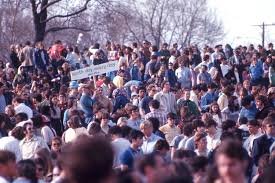
In December 1968, the Apollo 8 mission gifted humanity with a breathtaking image: Earth, a single, shimmering blue marble suspended in the vast darkness of space. This iconic photograph sparked a collective realization – we all share one home. Within just 16 months, the first Earth Day brought together a record-breaking 20 million Americans in peaceful demonstrations, a number that remains unmatched today.
We rallied to protect our shared planet, and for that day, at least, to care for one another. This Earth Day, April 22nd, finds us facing new divisions, but also with fresh perspectives of our planet, thanks to missions like Artemis II.
Stay Informed: Climate News Delivered
We deliver climate news to your inbox like no other. Choose from our daily or weekly newsletters, featuring original stories and a digest of the web’s top headlines – all for free.
- #1 Newsletter: The week’s climate and energy news – our original stories and top headlines.
- Dan Gearino’s Weekly Take: A habit-forming analysis of the energy transformation reshaping our world.
- Tuesday Digest: A concise overview of the most pressing climate-related news, written by Kiley Price.
- Daily Email: Groundbreaking stories from our national network of award-winning reporters.
- Behind the Scenes: Exclusive insights from executive editor Vernon Loeb and our reporters.
- Environmental Justice Digest: Stories on the inequalities that worsen the impacts of climate change on vulnerable communities.
A Conversation with Environmental Historian Adam Rome
Adam Rome is a professor and environmental historian at the University at Buffalo and author of “The Genius of Earth Day: How a 1970 Teach-In Unexpectedly Made the First Green Generation.” This interview has been edited for clarity and brevity.
The Political Landscape of the Late 1960s
STEVE CURWOOD: Tell me a little about the political atmosphere of the late 1960s. To what extent did movements like civil rights, anti-war, and women’s rights set the stage for that first Earth Day in 1970?
ADAM ROME: The founder of Earth Day, Senator Gaylord Nelson from Wisconsin, was deeply invested in the major issues of the time. As governor, he recognized the environment as a critical challenge. The protest spirit and the feeling that things were going wrong were essential, as was the belief that collective action could solve problems.
Nelson assembled a team of young activists, many with backgrounds in the anti-war, civil rights, and feminist movements. Surprisingly, Earth Day also resonated with conservatives, making it a truly bipartisan effort – a remarkable feat in today’s political climate.
The Scale of the First Earth Day
CURWOOD: How many people participated in that first Earth Day?
ROME: An astonishing 20 million people – roughly one-eighth of the U.S. population. Every college, every K-12 school hosted an event. Demonstrations took place in public spaces and outside corporate and government buildings. The impact was so significant that Congress adjourned for the day, with two-thirds of its members participating in Earth Day events.
A National Conversation
CURWOOD: Your book describes the first Earth Day as a “teach-in.” What was the atmosphere like?
ROME: Nelson borrowed the “teach-in” strategy from the anti-war movement, aiming to foster debate and empower people. He believed a national conversation could lead to action. The issues hadn’t been widely discussed, and Earth Day became a period of soul-searching for many. Tens of thousands of people spoke publicly about environmental issues for the first time.
Debates raged about the severity of the problems, their root causes, and the necessary solutions. People questioned their consumption habits and considered their personal responsibility. It was a challenging but civil dialogue that forced people to confront their relationship with nature.
Lessons for Today
CURWOOD: This year’s Earth Day mirrors the original in many ways – political division, global conflict, and space exploration. How can we apply the lessons of 1970 to today’s challenges?
ROME: While parallels exist, the current moment feels more complex. In 1970, there was a greater faith in government’s ability to solve problems. Today, that trust is eroded. Finding ways to bridge the partisan divide is crucial, and many are exploring community-based initiatives like community gardens to foster dialogue and empower individuals.
CURWOOD: Despite its initial success, Earth Day feels more symbolic than impactful today. How did we arrive at this point?
ROME: Nelson didn’t initially envision Earth Day as an annual event. While some communities have continued the tradition, it often lacks the scale and impact of the original. The 50th anniversary in 2020 was overshadowed by the pandemic. We lack a recent example of a truly impactful, nationally organized Earth Day.
The Enduring Legacy
CURWOOD: What have we lost by diminishing the focus on Earth Day?
ROME: The most important lesson from the first Earth Day is its empowering effect. We need to find ways to inspire action and make people feel capable of creating change. The first Earth Day led to significant progress – cleaner air, cleaner water – demonstrating that collective action can yield measurable results.
Our nonprofit newsroom provides award-winning climate coverage free of charge and advertising. We rely on donations from readers like you to keep going. Please donate now to support our work.
David Sassoon, Founder and Publisher
Vernon Loeb, Executive Editor
We deliver climate news to your inbox like nobody else. Every day or once a week, our original stories and digest of the web’s top headlines deliver the full story, for free.