Tracy Kidder: A Legacy of Immersive Storytelling
Tracy Kidder, a Pulitzer Prize and National Book Award-winning author renowned for his deeply researched and compelling narrative nonfiction, has passed away at the age of 80. His ability to transform complex subjects – from the intricacies of computer engineering to the realities of life in a nursing home – into captivating bestsellers cemented his place as a master storyteller.
From Silicon Valley to the Classroom
Kidder’s breakthrough came with 1981’s The Soul of a New Machine, a groundbreaking work that offered a rare glimpse into the world of a fledgling computer company. Published long before Silicon Valley became a household name, the book won both the Pulitzer Prize and the National Book Award. As Kidder himself described, entering this world felt like “going into another country,” initially struggling to understand the technical jargon. This dedication to immersive reporting became a hallmark of his work.
Exploring the Human Condition
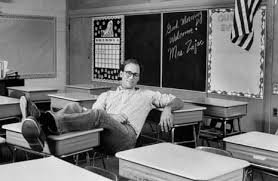
Throughout his career, Kidder consistently sought out stories that revealed profound truths about the human condition. Among Schoolchildren (1989) spent a year observing a dedicated fifth-grade teacher in Holyoke, Massachusetts, highlighting the challenges and rewards of inner-city education. Old Friends (1993) courageously explored the often-overlooked realities of aging in America, focusing on the dignity and resilience of two friends navigating life in a nursing home. Kidder masterfully captured the subtle nuances of their daily lives, demonstrating that “small things have to count for a great deal.”
Global Impact and Artistic Inspiration
Kidder’s influence extended beyond the literary world. Mountains Beyond Mountains (2003), chronicling the tireless efforts of a doctor bringing healthcare to Haiti, resonated with a new generation of readers and became a staple on university reading lists. The book’s impact was so profound that it even inspired the indie rock band Arcade Fire’s hit song, “Sprawl II (Mountains Beyond Mountains).”
A Life Shaped by Experience
Born in New York City in 1945, Kidder’s life was marked by a diverse range of experiences. He attended Harvard University and initially joined the ROTC to avoid the Vietnam War draft. He ultimately served in Vietnam, leading a radio research detachment. His experiences during the war were later documented in his memoir, My Detachment (2005), offering a nuanced and often humorous perspective on the lives of support troops.
The Art of Nonfiction
Kidder resisted easy categorization, rejecting labels like “literary journalist” and “creative nonfiction.” He saw himself simply as a storyteller, believing that the techniques of fiction could and should be applied to nonfiction. “I don’t think of fiction and nonfiction as all that different, except that nonfiction is not invented,” he explained. His commitment to truthful, immersive reporting, combined with his masterful storytelling abilities, leaves behind a lasting legacy in the world of literature. You can learn more about narrative nonfiction at Britannica.