Chappell Roan: The Rise of a Pop Star Through Bold Fashion Choices
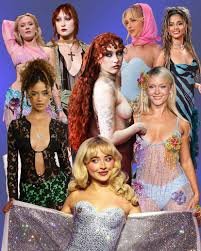
It’s impossible to imagine Cher without Bob Mackie, or Madonna sans Gaultier. In today’s music landscape, a generational talent is just as powerfully defined by their clothes. Pop stars’ looks are now intrinsically tied to their entire artistic act – their “eras,” and the immersive universes they create for their music (and devoted fans). It’s no coincidence that Gen Z’s leading pop artists – Chappell Roan, Charli XCX, and Sabrina Carpenter – have reached new heights of stardom following significant shifts in their image. This is the essence of Law Roach’s principle: “the right girl in the right dress.”
The Power of Visual Storytelling
“People like Prince, David Bowie, and Björk created entire worlds and remained incredibly true to that vision in everything they did – sonically and visually,” explains Genesis Webb, Chappell Roan’s stylist, in an interview with W Magazine. “It’s how you communicate how people should feel.” In 2026, this translates to crafting both real-life (IRL) and online personas that demand attention and leave a lasting impression.
Webb is a master of world-building, successfully refining Chappell Roan’s wardrobe. Shortly after styling the “Pink Pony Club” artist for a series of impactful festival performances in the summer of 2024, album sales for The Rise and Fall of a Midwest Princess – which had debuted nearly a year prior – skyrocketed. Webb and Roan have tapped into a shared appreciation for drag and Club Kid culture, resulting in viral fashion moments, like the singer’s Statue of Liberty-inspired look at Governors Ball in 2024.
The stylist collaborated with fetishwear designer Monique Fey to reimagine the iconic sculpture’s toga in latex, eliciting enthusiastic applause when Roan revealed a glimpse of her bare buttocks through a strategically placed cutout. This playful boldness echoes Madonna’s Blond Ambition Tour, where she famously shed her pantsuit to reveal a satin leotard with conical cups, designed by a then-emerging Jean Paul Gaultier.
Reinterpreting the Familiar & Nostalgia’s Influence
However, simply recreating the past isn’t enough. Reinterpreting familiar styles is key to building a sustainable image, according to Tyla’s stylist, Ron Hartleben. He frequently incorporates vintage and archival fashion, pieces predating his client’s birth. For example, Tyla’s Tom Ford for Gucci minidress at the CFDA Awards was a rare and impactful choice.
“Wearing historical pieces places talent in a new light and invites a different kind of examination. It’s a more intellectual approach to fashion, moving beyond simply wearing the shiniest, newest thing,” Hartleben explains. “Adding that layer of knowledge elevates an artist’s star power, as the outfit carries a depth that isn’t immediately apparent.”
Hartleben also played a pivotal role in Sabrina Carpenter’s reinvention, styling her for the “Feather,” “Espresso,” and “Please Please Please” music videos. His work was instrumental in transitioning Carpenter beyond her teeny-bopper image. “She wanted a new visual language that was more fashion-forward, playful, and tongue-in-cheek,” Hartleben shares.
Carpenter, a former Disney Channel star, had been building a solo career, but the release of “Feather” marked her first true mainstream success. The music video, featuring the singer dancing scantily clad around a church in Carolina Herrera tulle, sparked controversy and propelled her towards a musical coming-of-age, culminating in her breakthrough album, Short n’ Sweet. Old Hollywood and pin-up silhouettes were repackaged for a younger audience, a concept continued by stylist Jared Ellner.
Y2K & The Freedom of Expression
Carpenter’s rhinestone bodysuits and negligées from the Short n’ Sweet Tour are modern interpretations of vintage lingerie, designed by Victoria’s Secret – a brand that simultaneously evokes nostalgia for Gen Z. As children of the 2000s, the decade’s aesthetics heavily influence pop’s new guard.
Zara Larsson’s stylist, Caterina Ospina, cites cartoons and dolls like Winx Club and Bratz as sartorial influences, while Hartleben has dressed Tyla in Rock Revival, a noughties mall brand akin to True Religion and Affliction. “Y2K was a time of freedom and embracing sexual expression through clothing, feeling empowered in your body and taking risks without fear of judgment,” Hartleben explains.
Ospina echoes this sentiment, describing her approach to working with Larsson: “Zara’s style conveys a feeling of being sexy and free, of being able to be anyone or anything, and people love her for that. She’s not dressing for anyone’s gaze; she’s dressing for herself.”
Paying Homage & Defining Uniqueness
This self-expression resonates with the legacies of artists like Rihanna, Beyoncé, and Lady Gaga, who inspired Tyla, Larsson, and Chappell Roan. Paying homage to cultural predecessors is a key strategy for pop star stylists. Tyla, for example, nodded to Aaliyah at the MTV European Music Awards in 2024, wearing a fur-trimmed Roberto Cavalli gown mirroring Aaliyah’s iconic look from the 2000 MTV Video Music Awards.
These visual cues aren’t always literal. Chappell Roan captures Lady Gaga’s ethos without direct references, through her choice of designers (like Alexander McQueen, who cited Gaga as a muse) and her ability to tell stories with clothing. Webb structured Roan’s looks at the 2024 VMAs into three acts, reminiscent of Gaga’s layered reveal at the 2019 Met Gala.
Defining what sets an artist apart is crucial. Larsson is rarely seen without a hibiscus blossom, while Tyla often flips the waistline of her jeans. Combined with a stylist’s awareness of emerging trends – like Larsson’s keychain miniskirts and Tyla’s reimagining of a ’90s Chanel top as a dress – these details establish distinct personalities. Collaborating with independent and emerging designers, like Zana Bayne, who crafted leather armor for Roan’s VMAs performance, also contributes to uniqueness.
“I can create new pieces from scratch with smaller designers, things you won’t see on the runway, and things that will be exclusive,” Ospina says. “It’s a way of supporting emerging talent and helping fashion evolve.”