The Power of a Single Line: Val Kilmer’s Eternal Legacy
In the vast history of cinema, certain moments transcend the screen to become permanent fixtures in our collective memory. The 1990s were particularly rich with these “badass” snapshots. We remember Arnold Schwarzenegger’s cold precision in Terminator 2 and Keanu Reeves’ frantic energy in Speed. However, few performances possess the effortless, dangerous charm of Val Kilmer in the 1993 Western epic, Tombstone.
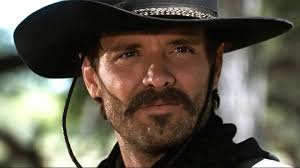
When Kilmer, portraying the tuberculosis-stricken Doc Holliday, softly utters the immortal phrase, “I’m your huckleberry,” he doesn’t just deliver a line; he defines a character. It is a moment of quiet confidence that outshines the loud explosions of contemporary action cinema.
Tombstone: A Resurgence of the Western Genre
Released during a pivotal revival of the Western genre—spurred by the success of Dances With Wolves and Unforgiven—Tombstone arrived as a masterclass in ensemble acting. While Kurt Russell provided a sturdy, authoritative presence as Wyatt Earp, it was Val Kilmer who stole every scene he inhabited.
The film’s superiority over its rivals is reflected in its critical reception. For instance, if you check Rotten Tomatoes, you will see that Tombstone maintains a strong certified fresh score, vastly eclipsing Kevin Costner’s Wyatt Earp. The secret to this success? A tighter narrative and a revolutionary performance by Kilmer.
The Art of the Performance: The Dual Life of Doc Holliday
The real Doc Holliday was a walking contradiction: a highly educated Southern dentist and a compulsive gambler with a penchant for public chaos. Val Kilmer’s brilliance lay in his ability to marry these two personas. He portrayed Holliday as a sly, sick aristocrat who was acutely aware that death was waiting around the corner.
In his 2020 memoir, I’m Your Huckleberry, Kilmer reflected on his attraction to the role, linking the gunfighter’s appetite for duels to the romanticized yet murderous history of firearm culture. This depth is evident in his Shakespearean approach to the dialogue, which feels natural to the period without ever feeling forced.
What Makes the “Huckleberry” Scene Iconic?
- Subtlety over Aggression: Unlike the menacing scowl of Clint Eastwood’s Dirty Harry, Kilmer uses a soft, almost polite tone.
- Physicality: His posture suggests a man who has already accepted his fate, making him the most dangerous person in the room.
- Character Revelation: In just three words, the audience understands that Holliday is ready to die, provided he takes his enemies with him.
A New Kind of Western Hero
Before Val Kilmer, Western protagonists typically fell into two camps: the righteous lawman (think John Wayne) or the principled outlaw (think Eastwood). Kilmer introduced a third archetype: the tragic, offbeat anti-hero.
Holliday used his terminal illness not as a weakness, but as a cover. His fragility fooled his enemies, whether at the poker table or during a shootout. By making his suffering his most powerful weapon, Kilmer transformed Doc Holliday into the ultimate Old West superhero.
For more detailed information on the cast and production of this classic, you can visit the IMDb page for Tombstone.
Do you think Val Kilmer’s Doc Holliday is the greatest Western performance of all time? Let us know your thoughts in the comments below!