A Cinematic Journey Back to the Trojan War
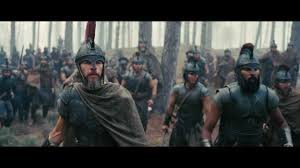
The legendary tales of ancient Greece have found a new, breathtaking life on the big screen. Christopher Nolan’s The Odyssey has officially arrived in cinemas, offering a fresh and visually stunning adaptation of one of the most influential epic poems in human history. Based on the works attributed to Homer, the film transports audiences into the chaotic aftermath of the Trojan War, following the grueling journey of Odysseus, the King of Ithaca.
With a runtime of 173 minutes, Nolan manages to condense the vast scope of the original 24-book poem into a gripping cinematic experience. But beyond the spectacle, the film has reignited a global conversation: how much of the Trojan War was actual history, and how much was pure myth?
A Star-Studded Cast for an Epic Tale
To bring this mythical world to life, Nolan has assembled a powerhouse ensemble cast that bridges the gap between modern stardom and ancient archetypes:
- n
- Matt Damon as the cunning Odysseus
- Anne Hathaway as the resilient Penelope
- Tom Holland as the searching Telemachus
- Zendaya as the Goddess Athena
- Robert Pattinson as the antagonist Antinous
- Charlize Theron as the enchanting Calypso
- Lupita Nyong’o as the legendary Helen of Troy
The Trojan War: Separating Fact from Fiction
For centuries, scholars have debated whether the Trojan War actually happened. The truth likely lies somewhere in the middle—a blend of historical Bronze Age conflicts and ancestral storytelling.
Ancient historians like Herodotus believed the war was a real event, while the mathematician Eratosthenes dated it around 1184/3 BC. While modern historians, as noted by the BBC, remain more skeptical about the specific timeline, archaeological evidence provides some grounding. In the 19th century, Heinrich Schliemann uncovered ruins in modern-day Turkey that are widely believed to be the site of Troy.
According to History Extra, while Schliemann’s methods were flawed, later research confirmed that a significant city existed there during the late Bronze Age and suffered repeated destructions, providing a tangible link to the legends of the Trojan War.
The Legend of Odysseus: The Master Strategist
Odysseus is remembered not just as a warrior, but as a genius of strategy. It was his brilliant (and deceptive) plan to build the Trojan Horse that finally allowed the Greeks to breach the walls of Troy and end the decade-long siege.
However, the victory came with a price. Odysseus spent another ten years battling mythical beasts, resisting the seductive songs of the Sirens, and enduring the captivity of the nymph Calypso. In total, he was away from his home and family for twenty years—a journey of endurance that forms the emotional core of Nolan’s film.
The Science Behind the Myth: The Origin of the Cyclops
One of the most captivating elements of The Odyssey is the encounter with the Cyclops. But where did the idea of a one-eyed giant come from? Science suggests a fascinating answer: mammoth fossils.
During the Pleistocene epoch, land bridges allowed mammoths to roam Mediterranean islands. When these animals died, their skulls remained. Because an elephant’s trunk contains no bone, the large central nasal cavity in the skull looks remarkably like a single, massive eye socket.
As highlighted by researchers at the Museum of Natural History in Berlin and reported by Live Science, it is highly probable that ancient Greeks discovered these fossils and imagined the creatures they belonged to, giving birth to the myth of the Cyclops.
Whether through the lens of a Christopher Nolan masterpiece or the pages of Homer’s poetry, the stories emerging from the Trojan War continue to captivate us, reminding us that the line between history and legend is often beautifully blurred.