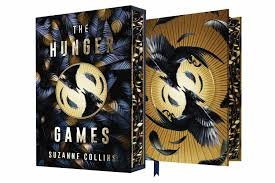
The Hunger Games: Why the Saga Still Captivates Millions Today
Few stories have managed to penetrate the cultural zeitgeist as deeply as The Hunger Games. What started as a gripping trilogy of novels by Suzanne Collins evolved into a global cinematic phenomenon, blending survival instincts with a searing critique of social inequality. But what is it about the world of Panem that keeps us coming back?
The Brutal World of Panem: A Mirror to Our Own
At its core, The Hunger Games presents a terrifying vision of the future. Panem, a nation divided into twelve impoverished districts ruled by the opulent Capitol, serves as a stark metaphor for the gap between the ruling elite and the working class. The annual Hunger Games—a televised fight to the death—is not just a plot device; it is a tool of psychological warfare used to maintain control through fear and spectacle.
This narrative resonates today because it touches upon universal themes: the struggle for resources, the influence of media manipulation, and the inherent human desire for freedom. For more details on how dystopian literature reflects society, you can explore the archives of Britannica.
Katniss Everdeen: The Unlikely Symbol of Rebellion
The heart of the story lies in Katniss Everdeen. Unlike traditional heroes, Katniss isn’t driven by a desire for glory or political power. Her initial motivation is pure survival—first for her sister, Prim, and later for herself.
Her transformation from a reluctant tribute to the “Mockingjay,” the face of a revolution, provides a powerful arc of empowerment. Katniss represents the voice of the voiceless, proving that a single act of defiance—like volunteering for the games—can ignite a fire that consumes an entire oppressive regime.
The Evolution of the Franchise
The impact of The Hunger Games has extended far beyond the original trilogy. The recent introduction of prequels, such as The Ballad of Songbirds and Snakes, has expanded the lore, offering a psychological study of President Snow’s rise to power. This expansion allows fans to analyze the cycle of violence and the philosophical debate between nature and nurture.
Key Themes That Make the Saga Timeless:
- Sacrifice: The emotional weight of choosing who lives and who dies.
- Media Critique: The way the Capitol turns suffering into entertainment, echoing modern reality TV and social media obsession.
- Political Agency: The transition from survival mode to active political resistance.
- Hope as a Weapon: The idea that hope is the only thing stronger than fear.
Final Thoughts: The Legacy of the Games
Whether you are a fan of the books or the films, The Hunger Games remains a masterclass in storytelling. It challenges us to question the structures of power in our own world and reminds us of the cost of indifference. If you want to check the critical reception and ratings of the films, Rotten Tomatoes provides a comprehensive overview of the series’ cinematic journey.
The saga is more than just a survival story; it is a warning and a call to empathy, ensuring its place in the hall of fame of modern entertainment.