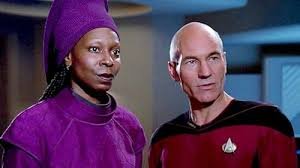
Star Trek: The Next Generation (TNG), which premiered in 1987, isn’t just a science fiction television series; it’s a cultural phenomenon. Following the success of the original Star Trek, TNG boldly went where no show had gone before, expanding the universe and introducing a new generation to the ideals of exploration, diplomacy, and the pursuit of knowledge. For many, it remains the definitive Star Trek experience, and its influence continues to resonate in modern science fiction and beyond.
A New Crew, A New Enterprise
The series centers around the crew of the USS Enterprise-D, a Galaxy-class starship, under the command of Captain Jean-Luc Picard (Patrick Stewart). Unlike the more swashbuckling Captain Kirk, Picard is a thoughtful, diplomatic leader, prioritizing negotiation and understanding. He’s supported by a diverse and compelling crew: Commander William Riker (Jonathan Frakes), the capable first officer; Data (Brent Spiner), the android striving to understand humanity; Counselor Deanna Troi (Marina Sirtis), an empath providing crucial emotional insight; Lieutenant Commander Geordi La Forge (LeVar Burton), the chief engineer with a VISOR allowing him to see the electromagnetic spectrum; Worf (Michael Dorn), the Klingon security chief grappling with his heritage; and Dr. Beverly Crusher (Gates McFadden), the ship’s compassionate chief medical officer. This ensemble cast, with their complex relationships and individual arcs, is a key reason for the show’s enduring appeal.
Themes That Still Resonate
Star Trek: The Next Generation wasn’t simply about space battles and alien encounters. It tackled complex ethical and philosophical questions that remain relevant today. Episodes frequently explored themes of prejudice, artificial intelligence, the nature of consciousness, the dangers of unchecked power, and the importance of individual rights. The show’s commitment to social commentary, often presented through thought-provoking allegories, set it apart from many of its contemporaries. For example, the episode “Darmok” brilliantly illustrates the challenges of communication and understanding between cultures, while “The Measure of a Man” raises profound questions about the rights of artificial intelligence. You can find a detailed analysis of these themes on Memory Alpha, the definitive Star Trek wiki.
Technological Foresight
TNG’s influence extends beyond its philosophical depth. The series famously predicted many technologies that are now commonplace. The handheld communicator, similar to a modern smartphone, was a staple of the show. The universal translator, enabling seamless communication with alien species, remains a tantalizing prospect for scientists. Even the holodeck, a virtual reality environment, anticipates the advancements being made in immersive technologies today. The show’s writers and designers weren’t simply inventing futuristic gadgets; they were extrapolating from existing scientific trends and imagining the possibilities of a technologically advanced future. A fascinating article on the show’s technological predictions can be found on Smithsonian Magazine.
A Lasting Legacy
Star Trek: The Next Generation concluded its seven-season run in 1994, but its legacy continues to thrive. The show spawned several spin-off series, including Deep Space Nine and Voyager, and its characters have reappeared in recent Star Trek productions like Picard. More importantly, TNG’s optimistic vision of the future – a future where humanity has overcome its divisions and is united in the pursuit of knowledge and understanding – remains a powerful and inspiring message. It’s a testament to the show’s enduring quality that it continues to attract new fans and inspire generations of scientists, engineers, and dreamers. The show’s impact on popular culture is undeniable, and its themes and ideas will continue to be debated and explored for years to come.