Rose Byrne: A Versatility That Transcends ‘Likability’
The debate surrounding whether a character is ‘likable enough’ feels almost irrelevant when discussing Rose Byrne. From her hilariously uptight portrayal of a boss’s wife in “Bridesmaids” to the unraveling mother in “If I Had Legs I’d Kick You,” Byrne consistently delivers characters who are challenging, complex, and far from conventionally warm. And that’s precisely what makes her such a compelling actress. Who, after all, would want Rose Byrne to simply offer comforting warmth? (Though, one could easily imagine her excelling in a Colleen Hoover adaptation.)
“Tow,” a modest independent film, doesn’t always hit all the right notes, but Byrne masterfully seizes her role, transforming the question of whether we *like* her into the very engine driving the film’s drama. Initially, Amanda Ogle, the character Byrne embodies, is difficult to connect with. Yet, as the story unfolds, we find ourselves drawn to something deeper – her raw humanity. This is the magic of acting.
A Life Lived Out of a Toyota Camry
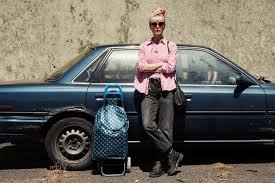
“Tow” is based on a true story, and while the premise might seem improbable, the film’s strength lies in its unflinching portrayal of Amanda’s struggle. Byrne plays Amanda, a woman living out of her 1991 slate-blue Toyota Camry in Seattle. The car isn’t merely transportation; it’s her sanctuary, her sole companion. Her connection to the outside world is tenuous, limited to phone calls with her teenage daughter in Utah (played with sensitivity by Elsie Fisher, known for “Eighth Grade”).
The film doesn’t dwell on the specifics of how Amanda arrived at this point, but her appearance speaks volumes. Her style – blonde hair with bangs tucked under a paisley pink kerchief, a leather jacket, and oversized sunglasses – is a blend of thrift-shop punk and defiant resilience. She’s a vet tech who has finally secured a job, but her lack of transportation threatens her newfound opportunity. The film chronicles her year-long battle to reclaim her car from a commercial towing lot, Kaplan Towing, which is holding it hostage for a $273 fee – an insurmountable sum for Amanda.
Fighting the System, Finding Connection
Amanda’s journey leads her through a network of individuals: Barbara (Octavia Spencer), the compassionate yet firm overseer of a homeless shelter; Kevin (Dominic Sessa), a saintly nonprofit lawyer; Nova (Demi Lovato), a kind soul; and Denise (Ariana DeBose), a woman as fiercely independent as Amanda herself. She even encounters a sociopathic resident at the shelter (Lea Delaria, delivering a riveting performance).
We learn that Amanda is a recovering alcoholic, seven months sober, with a history of childhood trauma. However, the film wisely avoids a simplistic narrative of decline, suggesting instead that economic hardship and her own complex personality converged to create her current circumstances. “Tow” doesn’t apologize for Amanda’s flaws; it presents her as a fully realized, imperfect human being. The film’s message, if it has one, is that even those who have lost everything deserve compassion and respect, especially when they dare to challenge the system. The Guardian highlights the film’s raw and honest depiction of this struggle.
A Story That Feels Stuck in Place
While “Tow” is a compelling character study, the narrative occasionally feels repetitive. Amanda’s relentless pursuit of her car, consuming an entire year of her life, begins to feel like a cycle. The film acknowledges that her car represents more than just transportation; it symbolizes her dignity. However, it doesn’t fully explore whether clinging to that symbolism might be hindering her progress. Despite this, “Tow” remains a powerful testament to the resilience of the human spirit and a showcase for Rose Byrne’s extraordinary talent. For more on independent film, check out IndieWire.