Rosamund Pike and the Battle for Attention: Why We’re Forgetting How to Experience Art
In a world dominated by the “infinite scroll,” the act of paying undivided attention has become a rare commodity. Recently, acclaimed actress Rosamund Pike found herself at the centre of a growing cultural debate after a visceral encounter with an audience member during her performance in Inter Alia at London’s Wyndham’s Theatre.
Pike, portraying a crown court judge grappling with the complexities of the legal system and personal tragedy, did the unthinkable: she stopped the momentum of the evening to confront a theatregoer texting during the play’s climax. While she acknowledged the possibility of an emergency, her message was clear: the glow of a screen is a disruption that cannot be ignored.
Beyond Phone Etiquette: The Erosion of Presence
While it may seem like a simple matter of manners, Rosamund Pike’s frustration points to a deeper systemic issue. We are witnessing a shift where art is no longer experienced for its own sake, but rather as “content” to be documented for social media validation. The goal is no longer to be moved by a story, but to prove that we were there.
Pike is far from alone in this struggle. The West End and Broadway have seen a surge in performers calling out poor audience behaviour:
- n
- Cynthia Erivo interrupted her performance of Dracula to stop a member of the audience from filming.
- Andrew Scott famously halted a soliloquy in Hamlet when he spotted a laptop being used for emails in the stalls.
- Lesley Manville has openly criticised the trend of filming curtain calls instead of simply applauding.
A Pandemic of Distraction Across All Media
This decline in focus isn’t limited to the stage. The “digital drift” has seeped into every corner of our cultural consumption. In cinemas, the glow of smartphones has become a constant nuisance, leading legendary director Martin Scorsese to express his disillusionment with the modern movie-going experience.
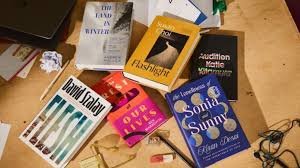
Even the way we consume literature and visual art has changed. On platforms like BookTok, some creators admit to skipping long descriptive passages—the very soul of a novel—to jump straight to the dialogue. In museums, masterpieces are often viewed through the lens of a smartphone camera for a quick selfie, leaving the actual painting as a mere backdrop.
The Cost of the Attention Economy
Why is this happening? The answer lies in the architecture of our digital landscape. The business models of social media platforms are built on the attention economy, training our brains for partial, interruptible consumption via 30-second clips and rapid-fire feeds.
The modernist writer Virginia Woolf once viewed sustained attention as an essential condition of being human—the ability to notice the flicker of light on water or the texture of a morning. When we lose this capacity, we lose the ability to be truly transformed by a narrative.
Is There a Way Back?
As a reaction to this digital saturation, we are seeing the emergence of “enforcement measures.” From the use of Yondr pouches (which lock phones away during shows) to artists like Jack White banning smartphones entirely, the industry is fighting to reclaim the space for focus.
More encouragingly, there is a growing cultural backlash among young people. The rise of “dumbphones” and a conscious effort to seek out uninterrupted experiences suggest that many are beginning to realise that constant connectivity comes at a steep psychological cost.
Final Thoughts
Great art requires a temporary relinquishment of the self—a willingness to step out of our own digital bubbles and enter someone else’s world. When Rosamund Pike asked for the audience’s attention, she wasn’t just asking for silence; she was asking us to remember how to be human again.