Roger Corman: The Master of Cult Cinema and His Surprising Cameos
When Roger Corman passed away in 2024 at the remarkable age of 98, he left behind a filmography boasting hundreds of titles. Beyond directing over 50 films (including several uncredited) and producing nearly 500, Corman also enjoyed a lesser-known career as an actor. Initially, his on-screen appearances were born of necessity – filling in as an extra or stepping in when an actor was unavailable. However, these appearances evolved into sought-after cameos from directors eager to repay Corman for launching their careers.
From The Godfather to The Howling: A Career of Cameos
The first director to extend this invitation was Francis Ford Coppola, who cast Corman as a senator on the committee investigating the Corleone organization in 1974’s The Godfather Part II. While initially a silent observer, Corman delivers a pivotal question when a key witness suddenly falls silent. His astute observation – questioning the identity of a nervous man seated near Michael Corleone and inquiring about his connection to the witness – subtly highlights the intimidation at play.
Corman found himself on familiar ground in Paul Bartel’s Cannonball! (1976), playing the Los Angeles district attorney determined to halt a cross-country race (spoiler alert: he fails!). Given his demanding role at New World Pictures, this marked a rare instance of him appearing in one of his own productions, a trend that increased as his former employees gained prominence.
The New World Alumni: Dante and Demme Pay Homage
Joe Dante and Jonathan Demme, two prominent New World Pictures alumni, frequently featured Corman in their films. Demme, who honed his skills writing and producing biker and women-in-prison flicks, and Dante, who started in the editing department, both acknowledged Corman’s influence through these cameos.
Dante first put Corman to work in 1981’s The Howling, paying homage to a similar scene in Rosemary’s Baby. Corman is stationed outside a phone booth used by the heroine, and the scene culminates with him checking the change slot – a detail Dante revealed required a quarter (or, according to Corman, 50 cents!) to convince him to participate.
Expanding Roles and Subtle Appearances
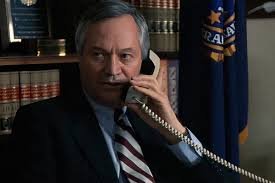
Demme continued the tradition with roles in Swing Shift (1984) as Mr. MacBride, the aircraft plant owner, initially heard only as a voice on the loudspeaker, and later announcing Japan’s surrender. He then appeared as FBI Director Hayden Burke in 1991’s The Silence of the Lambs, briefly seen reprimanding Jack Crawford. A longer scene, where he suspends Clarice Starling, was wisely cut from the final film.
A shift in tone occurred with 1993’s Philadelphia, where Corman played Mr. Laird, a businessman pressured to downplay his praise for Andrew Beckett. This marked the first time Corman received billing in the opening credits. He continued to embrace more relaxed roles, such as Mr. Randolph in Dante’s Runaway Daughters (1994), a genial father proud of his son’s naval enlistment.
A Penny-Pinching Icon and Final Cameos
Corman’s famously frugal nature shone through in cameos like his appearance in Ron Howard’s Apollo 13 (1995) as a congressman questioning space program funding. He also played a cynical “network guy” in Dante’s The Second Civil War (1997), prioritizing advertisers over journalistic integrity, and an exasperated movie director in Looney Tunes: Back in Action (2003), lamenting the cost of an airbag.
His final cameos came courtesy of Demme, with appearances in 2004’s The Manchurian Candidate and 2008’s Rachel Getting Married. In Rachel Getting Married, Corman’s joyful presence as a wedding guest, filming the ceremony, is particularly touching. As Demme himself stated, “The only way to see him…is to offer him a part in a movie,” a testament to Corman’s enduring work ethic and the deep respect he commanded within the industry.
Further Reading: For a deeper dive into Roger Corman’s legacy, explore Britannica’s profile on Roger Corman.