Breaking the Curse of Video Game Movies
For decades, the transition from console to cinema has been a minefield of disappointments. Most video game adaptations fail because they attempt to translate the plot rather than the experience. We often end up with a series of cinematic cutscenes or one-dimensional characters that feel out of place in a three-dimensional world. However, Zach Cregger’s latest take on Resident Evil dares to do something different: it prioritizes the feeling of playing the game over the narrative of living inside it.
A Relatable Hero: From Controller to Chaos
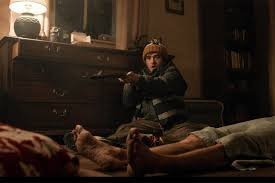
One of the boldest moves Cregger makes is stripping away the established lore. Purists might miss the presence of legendary figures like Leon Kennedy, but the film makes a strategic pivot. Instead of a battle-hardened cop, we are introduced to Bryan (played by Austin Abrams), a scrawny medical courier.
Bryan isn’t a super-soldier; he’s a mirror for the audience. He looks less like an action hero and more like someone who would be clutching a PlayStation controller in their living room. By placing an everyday person in the middle of the Umbrella Corporation’s nightmare in Raccoon City, the movie heightens the stakes and the humor.
Gamified Cinema: Mechanics as Plot
The brilliance of this movie lies in its commitment to “gameplay logic.” Cregger weaves in elements that will make any long-time fan smile, not just through Easter eggs—like the iconic typewriter in a deserted house—but through the progression of the protagonist. The film meticulously tracks the player-protagonist’s learning curve:
- Weapon Escalation: Bryan starts with nothing, eventually finding a pistol and then a shotgun.
- The “Noob” Experience: In a hilarious nod to inexperienced players, Bryan wastes precious ammunition shooting padlocks instead of searching for the key.
- Stealth vs. Combat: The narrative shifts as Bryan realizes that sneaking through a side entrance is often safer than charging in guns blazing.
Horror, Comedy, and the Absurdity of Survival
Because being inside a game is far more terrifying than playing one, the film leans heavily into horror-comedy. The tension is broken by Bryan’s genuine, high-pitched panic—a sound you’ll never hear from a first-person shooter protagonist.
Even the character development is treated with a wink and a nod. Bryan’s arc is tied to the sudden news of an unexpected pregnancy, leading to a sequence in an infested maternity ward that serves as a gore-filled metaphor for the fears of fatherhood. Cregger isn’t trying to create a deep cinematic masterpiece; he is poking fun at the very idea of character growth in a world where the primary goal is simply not getting your throat ripped out.
The Final Verdict: A Gory, Glorious Goof
Coming off the high-tension scares of Barbarian, some might see this as a lighter use of Cregger’s creative capital. But there is something refreshing about a director who understands that video games aren’t always about “productive” time—they are about the thrill of the headshot and the groan of seeing another monster around the corner.
If you’re looking for a faithful adaptation of the game’s soul rather than its script, this Resident Evil reimagining is exactly what the genre needed.