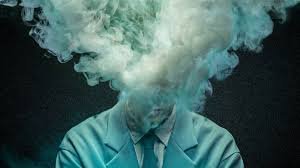
Netflix Human Vapor Series: A Breath-Taking Dive into Sci-Fi Horror and Conspiracy
Netflix continues to prove that some of the most daring and innovative storytelling happens outside of Hollywood. The latest sensation, the Netflix Human Vapor series, has quickly ascended the Global Top 10 Non-English TV rankings, amassing a staggering 24.3 million hours viewed shortly after its debut. But what exactly makes this Japanese sci-fi thriller so magnetic?
A Terrifying Premise: More Than Just a Ghost Story
The series wastes no time grabbing the audience’s attention. In a shocking opening sequence, a prominent television professor is interviewed live on air, only to be attacked by an invisible force that causes him to explode violently in front of millions of viewers. This incident introduces the world to the Human Vapor—a mysterious entity capable of transforming into gas to infiltrate and kill victims from the inside out.
The investigation falls into the hands of two central figures with a strained past:
- n
- Detective Kenji Okamoto (Shun Oguri): A seasoned investigator pulled back into action by the gruesome nature of the crimes.
- Reporter Kyoko Kono (Yû Aoi): An ambitious journalist who witnessed the initial attack firsthand.
As their parallel investigations merge, they discover that the Human Vapor isn’t just a random serial killer. The entity is systematically eliminating targets linked to the White Center, a clandestine organization with secrets spanning decades, involving high-ranking politicians, the yakuza, and a forgotten meteorite disaster.
Reimagining a Cult Classic: 1960 vs. Modernity
While the Netflix Human Vapor series is inspired by the 1960 Toho cult classic directed by Ishiró Honda, it is far from a traditional remake. Where the original focused on a tragic love story and a man victimized by scientific experiments, the modern adaptation pivots toward a sprawling political conspiracy thriller.
Written by the visionary duo Yeon Sang-ho (the mastermind behind Train to Busan) and Ryu Yong-jae, the show swaps nostalgia for a gritty exploration of institutional corruption, revenge, and the systemic abuse of power.
A Historic Collaboration: Netflix x Toho
Beyond the plot, the series marks a significant industry milestone: the first official collaboration between Netflix and Toho, the legendary Japanese studio world-renowned for the Godzilla franchise. This partnership modernizes Toho’s lesser-known properties while paying homage to the tokusatsu (special effects) roots that defined Japanese cinema.
Atmosphere, Visuals, and Performance
The series excels in creating a sense of dread. The villain, played by model Uta Uchida in a striking acting debut, is a haunting presence. His silence and stillness make him even more unnerving than his gaseous abilities.
Visually, the show blends practical effects with CGI to bring the vaporous transformations to life. The direction turns ordinary elements—steam, smoke, and drifting clouds—into sources of tension, reminding the viewer that the killer could be anywhere at any moment.
Final Verdict: Why You Should Watch It
The Netflix Human Vapor series follows in the successful footsteps of other Asian genre hits like Hellbound and Parasyte: The Grey. It doesn’t dilute its complex themes for a global audience; instead, it trusts the viewer to engage with a sophisticated mix of film noir, body horror, and sci-fi.
By using a 60-year-old premise as a springboard for a modern critique of power, Human Vapor proves that the best reboots don’t try to recreate the past—they evolve it into something entirely new and terrifying.