A New Urban Mystery: Banksy’s Possible Return to London’s Streets
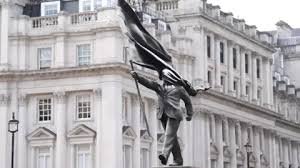
London is once again buzzing with excitement and speculation. A mysterious, large-scale statue has suddenly appeared in the heart of the city, and all signs point to the world’s most elusive street artist: Banksy.
The sculpture, spotted in the prestigious St James’s area on Waterloo Place, depicts a man in a sharp suit stepping forward off his plinth. In a classic move of anonymity and symbolism, the figure carries a flag that partially obscures his face. Adding to the intrigue, the name “Banksy” has been scrawled across the base of the plinth, sparking a global conversation among art lovers and critics alike.
Strategically Placed: Art Meets History
The location of the installation is no accident. Waterloo Place is renowned for its grand architecture and a collection of traditional monuments, including statues of Edward VII and the Crimean War Memorial. By placing a subversive, modern piece in such a historic setting, the artist creates a powerful contrast between established power and contemporary rebellion.
A Pattern of Subversion
While official confirmation is still pending, this installation follows the signature style of the anonymous artist. Banksy is famous for his covert installations that challenge social norms and political structures. This isn’t his first time transforming London’s landscape into an open-air gallery:
- n
- 2004: The installation of “The Drinker,” a provocative twist on Rodin’s “The Thinker,” on Shaftesbury Avenue.
- September: A striking scene at the Royal Courts of Justice featuring a protester and a judge.
- December: A poignant mural in Bayswater depicting two children.
- 2024: A whimsical yet biting “animal trail” across the capital, featuring everything from elephants to piranhas.
The Banksy Phenomenon: More Than Just Paint
What makes Banksy’s work so captivating is the blend of stealth, satire, and social commentary. His pieces often appear overnight and are later verified through his official Instagram account, turning the city into a scavenger hunt for art enthusiasts.
Because his works are often installed on both private and public property without permission, they frequently face a race against time before being removed by authorities or claimed by collectors. This ephemeral nature adds to the value and urgency of experiencing the art in its original urban context.
Whether this new statue is a confirmed masterpiece or a clever homage, it proves that the spirit of street art continues to challenge the boundaries of traditional galleries and high society in London.