Reimagining a Classic: The Return of the Lone Wolf
There is something timeless about the “lone wolf” trope. From Jack Reacher to Ethan Hunt, we have always been drawn to the hyper-capable protagonist who can dismantle a criminal empire using nothing but grit, a few gadgets, and an unwavering sense of justice. These stories are typically the gold standard of “popcorn cinema”—thrilling, slightly absurd, and immensely satisfying.
However, Netflix’s Man on Fire 2026 attempts to flip the script. Instead of the high-octane fun we expect, this six-part series asks a daring question: What happens if we strip away the gloss and make the story relentlessly sad and serious?
The Evolution of John Creasy
The story of Man on Fire has evolved through several iterations. It began as an 1980 novel by AJ Quinnell, followed by a 1987 film starring Scott Glenn, and most famously, the 2004 adaptation featuring the powerhouse performance of Denzel Washington. Now, in 2026, we meet a new version of John Creasy.
In this latest reimagining, Creasy isn’t battling alcoholism; instead, he is a man shattered by a failed special forces mission. Haunted by Post-Traumatic Stress Disorder (PTSD), he is a soul adrift in anguish until a former colleague offers him a lifeline: a chance to rebuild his life in the vibrant, chaotic streets of Rio de Janeiro.
Key Plot Shifts in the 2026 Version:
- The Protagonist: Yahya Abdul-Mateen II steps into the role of Creasy with formidable presence.
- The Dynamic: Instead of a young child, Creasy forms a bond with Poe (played by Billie Boullet), a young adult who becomes his emotional anchor.
- The Stakes: The narrative maintains the core elements of a surrogate father-daughter bond and a relentless quest for vengeance against those who destroyed Poe’s family.
Yahya Abdul-Mateen II: A Powerhouse Performance
If there is a saving grace in Man on Fire 2026, it is undoubtedly Yahya Abdul-Mateen II. Known for his roles in high-profile blockbusters like Aquaman and Watchmen, Abdul-Mateen proves he is more than just a comic-book hero. He brings a stillness and a physical economy to the role that makes his combat skills entirely believable.
His performance is etched with pain. He doesn’t just play a “tough guy”; he portrays a man whose trauma is visible in every line of his face. The series allows him to explore dramatic depths, particularly in the slower, more conversational scenes regarding grief and mental instability.
The Clash of Tones: Grit vs. Absurdity
Where the series struggles is in its identity crisis. The show insists on a gloomy, oppressive atmosphere, yet it cannot resist the tropes of the action genre. There is a jarring disconnect when a character who spends half the episode in deep clinical depression suddenly leaps from a speeding car into a moving plane amidst a hail of machine-gun fire.
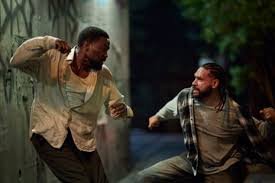
While the action sequences are expertly choreographed, they feel ludicrous when paired with such a somber tone. The addition of a “misfit gang” of accomplices further complicates the vibe, momentarily turning the dark thriller into something resembling a light-hearted heist movie, only for the characters to maintain stony, humorless expressions.
Final Verdict: Should You Watch It?
Man on Fire 2026 is a bold experiment in tone. While it may not achieve the perfect balance between drama and action, it is a compelling showcase for Yahya Abdul-Mateen II’s talent. If you are looking for a traditional action flick, this might feel too heavy. But if you appreciate a character study wrapped in a revenge plot, it’s worth your time on Netflix.
- Acting: 5/5 (Abdul-Mateen II is exceptional)
- Pacing: 3/5 (Talky scenes occasionally drag)
- Action: 4/5 (High quality, if slightly absurd)
- Overall Tone: Very Dark / Gloomy