The Gilded Cage: A Review of the Michael Jackson Biopic
When a project is produced by family members, there is always a delicate balance between a loving tribute and a sanitized hagiography. In the case of the new film Michael, the scales have tipped entirely toward the latter. While the project boasts a pedigree of talent, it ultimately feels like a bland, daytime TV movie that avoids the very friction that made Michael Jackson one of the most complex figures in music history.
Family Ties and Creative Choices
The production of Michael is deeply rooted in the Jackson legacy. With several relatives involved in the production—including the influential Jermaine Jackson—it was perhaps inevitable that the film would shy away from the darker, more contentious chapters of the star’s life. However, by removing the drama, the filmmakers have inadvertently removed the soul of the story.
The narrative follows a predictable chronological path, from the early days of the Jackson 5 to the peak of his solo superstardom. Surprisingly, the film stops in the mid-1980s, conveniently avoiding the accusations of child abuse and the subsequent legal battles that defined his later years. By erasing the conflict, the movie leaves us with a version of Jackson that feels more like a caricature than a human being.
Cast and Performances: Mirror Images and Missed Marks
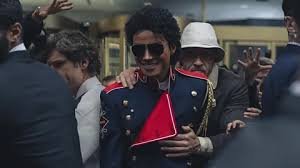
- Jaafar Jackson: Cast largely for his uncanny physical resemblance to his uncle, Jaafar struggles to convey emotional depth. He is often reduced to a permanent smile, whether he’s visiting sick children or buying exotic animals.
- Colman Domingo: Playing the role of the stern father, Domingo is barely recognizable under heavy prosthetics, portraying a menacing figure that feels more like a cartoon villain than a nuanced parent.
- Miles Teller: As lawyer John Branca, Teller maintains a smirk that suggests he knows a secret the audience isn’t privy to, adding little to the emotional weight of the film.
Technical Execution vs. Artistic Spirit
On paper, the crew is impressive. Directed by Antoine Fuqua (Training Day) and written by John Logan (Gladiator), one would expect a cinematic masterpiece. Instead, the dialogue is as functional and dry as a road sign, and the visuals lack the innovation that Jackson himself championed in his groundbreaking music videos.
The irony is palpable: Michael Jackson was a pioneer of spectacular, cutting-edge entertainment, yet the film about his life is utterly devoid of that same spirit. Rather than celebrating him as an artist, the film’s sterile approach feels like a grievance to his creative legacy.
Final Verdict
While Bohemian Rhapsody managed to blend pop appeal with Oscar-winning success, Michael is far more likely to find itself in the conversation for the Razzie Awards. It is a film that chooses safety over truth, leaving the viewer wondering how a man so multi-layered could be portrayed with such flatness.
Rating: ★☆☆☆☆