The Raw Beginnings of a Culinary Legend
Before he became the global face of culinary exploration and a multi-Emmy award winner with Parts Unknown, Anthony Bourdain was just a young man trying to find his place in the world. His journey didn’t start in a Michelin-starred kitchen, but in the gritty, salt-sprayed environment of Provincetown, Massachusetts.
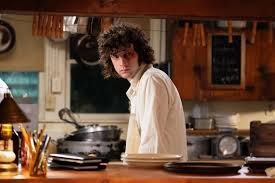
The upcoming biopic “Tony” (hitting theaters Aug. 7) seeks to capture this pivotal moment. Starring Dominic Sessa as a young, arrogant, and undisciplined Bourdain, the film delves into the summer that transformed a Vassar College student into a lifelong devotee of the kitchen.
Cinema vs. Reality: The Story of ‘Tony’
In the film, we see a romanticized yet chaotic version of Bourdain’s awakening. Driven by a crush on Nancy Putkoski, Bourdain finds himself stranded in Provincetown, eventually finding shelter and mentorship under a seasoned chef played by Antonio Banderas. This “Chef” figure serves as the catalyst, teaching him the raw beauty of shucking oysters and the discipline of the line.
While the movie simplifies some events for narrative impact, the essence remains true: Bourdain arrived looking for love and found a calling in the heat and pressure of professional cooking.
The Gritty Truth: ‘Kitchen Confidential’ and The Flagship
For those who have read his seminal memoir, Kitchen Confidential, the real story is even more visceral. Bourdain didn’t just stumble into a mentorship; he was forced into a dishwashing gig at The Flagship because he was flat broke.
The reality of his early career was a cocktail of hard work and hedonism:
- The Nickname: His coworkers called him “Mal” (short for mal carne, or “bad meat”), reflecting his status as the lowest rung of the kitchen ladder.
- The Culture: He was captivated by the “swagger” of the kitchen crew—men who lived lives of “adventure, looting, and pillaging,” disregarding conventional morality.
- The Spark: Bourdain recalls the moment he knew he wanted to be a chef: watching the chaotic, high-energy environment of a seafood restaurant where the chefs were treated like rockstars.
The Influence of Howard Mitcham
While the movie uses a composite character for the mentor, the real-life Howard Mitcham played a crucial role. Mitcham taught Bourdain that the joy of a meal isn’t found in the stars of a guide, but in the love and pride put into the food. Whether it was a high-end restaurant or a humble fisherman’s bar, the philosophy was the same: authenticity is everything.
A Legacy of Curiosity and Empathy
The film Tony consciously avoids the tragedy of Bourdain’s death in 2018, choosing instead to focus on his “superpower”: the ability to connect people through food, curiosity, and empathy. This period in Provincetown was where that superpower was born.
By the end of that formative summer, Bourdain had a suntan, a deep familiarity with recreational drugs, and an unshakable desire to pursue the culinary arts. This path eventually led him to the Culinary Institute of America (CIA) and, ultimately, to the corners of the globe.