Fran Lebowitz: The Art of Being Unreachable in a Hyper-Connected World
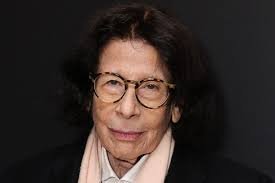
In an age where digital footprints are practically mandatory, one of New York’s most treasured and outspoken figures, Fran Lebowitz, famously navigates life without an email address, a cellphone, a computer, or even Wi-Fi. This deliberate technological abstinence isn’t just a quirk; it’s a foundation for her uniquely unfiltered worldview, a perspective she recently shared ahead of a highly anticipated appearance at Carnegie Hall.
The Digital Divide According to Lebowitz
For Lebowitz, the absence of modern gadgets is a source of constant, almost humorous, friction. “I’ve always had an antipathy to machines. The extent to which it angers people is really surprising to me,” she observes with characteristic dry wit. She recounts exasperated queries like, “I can’t find you!” or “I can’t reach you!” to which her simple, defiant response is, “So what?”
This steadfast refusal to engage with the digital realm fuels many of her pointed observations on contemporary society:
- On Artificial Intelligence (AI): Lebowitz doesn’t mince words, equating AI with “stealing.” While acknowledging that a younger version of herself might embrace such tools, her current stance is one of dismissal, rooted in a deep-seated skepticism about technological advancements.
- On Screen-Addicted Youth: The ubiquitous sight of children engrossed in iPads or iPhones, even in strollers, particularly irks her. She humorously recounts overhearing a child dictating directions from a device, suggesting, “If you are giving directions, maybe get up and walk.”
- On Driverless Cars: Her apprehension towards autonomous vehicles is palpable. Beyond the practical barrier of needing a phone to access them, she fears being a “hostage” to a car whose doors might lock until arrival, highlighting a profound distrust of relinquishing control to machines.
The Shifting Sands of Media and Culture
Lebowitz’s insights extend beyond technology, delving into the transformation of media and the arts. A seasoned writer who began her career penning pieces for magazines, she laments their current state.
“Magazines… I hate to say something so extreme like ‘are over,’ but, basically, they are. They were very important from the point of view of news and culture, but they’re not now.”
She critiques the modern online landscape, where everything is consumed on phones and the initial idea that the internet should be “free” has, in her view, devalued content and made traditional publishing unsustainable. This devaluation impacts professions once held in high esteem:
- The Writer’s Plight: “Everyone thinks they’re a writer now,” she notes, pointing out that while many write, few are read, and often for free.
- The Photographer’s Fall: Photographers for major magazines once earned substantially more than writers, a disparity she found unfair. Now, with everyone a casual photographer, that professional landscape has also been irrevocably altered.
Journalism Ethics Under Scrutiny
Lebowitz also casts a critical eye on the erosion of journalistic principles, recounting an instance where a reporter covering a subject later became romantically involved with him, a practice she finds deeply unethical. “They used to have rules in journalism. To me, that seems like a very basic rule,” she states, underscoring a perceived decline in professional standards.
Fame, Fury, and Political Irony
Never one to shy away from uncomfortable truths, Lebowitz embraces her status as an “anti-sweetheart.” She acknowledges the escalating public anger over both trivial and significant matters, positioning herself as an expert on fury, having been “angry since birth.” Yet, she differentiates her anger, reserving it for matters of true importance, rather than succumbing to the “one-note” rage she observes in others.
Her political commentary, too, is laced with characteristic irony. While she voted for a particular candidate, her primary satisfaction came from how much he upset “old Democrats” – a group she, an “old Democrat” herself, is tired of. She critiques lifetime political roles and, with a touch of affectionate cynicism, questions the candidate’s youthful idealism, finding it “adorable” but perhaps unrealistic for someone his age.
The Future of Film and Culture
As a connoisseur of culture, Lebowitz laments the changing ways people consume film. Her preference for seeing movies on a big screen is, in her view, an antiquated notion for younger generations who are content with “one square inch” of a phone screen. She echoes the frustration of filmmakers like Martin Scorsese, conceding that the golden age of cinema-going is unlikely to return.
Her own artistic integrity is fiercely guarded. Despite numerous offers, she has never sold her books for film adaptation, understanding that to “sell” means to relinquish control. She recalls a friend’s experience with a butchered adaptation, highlighting the practical solace of financial gain over artistic purity: an apartment in New York and a house on the beach.
Fran Lebowitz remains a singular voice, an anachronism by choice, offering biting commentary and invaluable insights into a world she observes with unwavering, unsentimental clarity. Her refusal to conform to technological trends serves not as a barrier, but as a lens through which she dissects the absurdities and anxieties of modern life, reminding us that sometimes, the sharpest observations come from those who choose to remain, delightfully, unplugged.