Conan O’Brien: The Patron Saint of Late-Night Hosts Returns to the Oscars
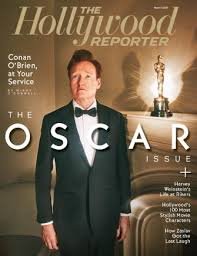
Stephen Colbert calls him “the patron saint of ex-talk show hosts.” Conan O’Brien, still meticulously crafting every joke and embracing the chaos, is returning to host the Academy Awards – again.
I promised Conan I wouldn’t reveal the joke. If it survives the editing process for his Oscars monologue, he understandably wants to keep the punchline under wraps. “It’s like this little baby bird that I’m cradling,” he says, cupping his hands as if protecting fragile words from his own critical eye.
We were backstage at Largo, a Los Angeles comedy club, after O’Brien delivered 20 minutes of material he’d been refining for three months. This surprise set was one of many as he prepared for his March 15th engagement hosting the Academy Awards. Each performance was followed by a day largely spent in the writers’ room. If he falters on the big night, it won’t be for lack of preparation.
The Obsessive Process
Joined by five writers, two strategically placed in the audience, O’Brien and his team debated what resonated, what might play better with the industry crowd at the Dolby Theatre versus the television audience, and what surgical adjustments were needed before the next trial run. “I get obsessive,” O’Brien admits. “I want to turn it off, but I can’t. It’s not always a fun ride, but that’s the deal. At 62, I understand it. I tell my daughter, ‘You have to know your own owner’s manual.’ I now know the Conan Owner’s Manual.”
His first Oscars hosting gig in 2025 was well-received, prompting a quick encore. “I don’t watch a lot of those things, but I just remember thinking, ‘Is this the greatest Oscars ever?’” says John Mulaney. “Conan is a true artist and an incredible broadcaster. He’s also got something you cannot fake and can only earn: stature.”
A Career Renaissance
Any live telecast is a gamble, and for O’Brien, it might seem masochistic. Having often been the underdog, he’s arguably at the peak of his powers. Retiring from late night in 2021, a sector now in dramatic decline, he seems prescient. He has a wildly successful podcast, landing a $150 million deal with SiriusXM, and an Emmy-winning travel show. He’s embracing opportunities he never had before, even appearing opposite Rose Byrne in the harrowing dramedy If I Had Legs I’d Kick You. He’s respected by his peers, cherished by his wife, Liza, and proud of his grown children.
So why risk the most thankless job in Hollywood? Again?
“When the first offer came in, I told him, ‘You don’t need to do this, you’ve got nothing to prove,’” says Jeff Ross, O’Brien’s close friend and executive producer. “When we quit late night, the goal was to only do things that are fun, things that we want to do. Well, this is what Conan wants to do.”
The Inner Viking
His HBO Max travelogue, Conan O’Brien Must Go, is aptly titled. O’Brien feels he has little control over his career choices. “There’s a little bearded Viking inside me,” he says. “He’s been there since I was 10 years old. And when that Viking decides on something – whether it’s replacing David Letterman with no experience, skiing a slope I have no business on, or hosting the Oscars – that’s what’s going to happen.”
This Viking, however, doesn’t seem to consider the impact on O’Brien’s mental health. He agonizes over his material, despite having filmed 4,380 episodes of late-night TV – first with Late Night and The Tonight Show at NBC, then a decade with TBS’ Conan. He approaches every public speaking opportunity with enthusiasm and dread.
During a break from the Oscar war room at Team Coco’s Hancock Park headquarters, sipping an Erewhon Strawberry Glaze Skin Smoothie, he explained his meticulous process. The only thing harder is not having enough time to prepare, like when he was unexpectedly asked to give a speech at a friend’s birthday party.
“I started to panic,” he says. “This isn’t televised. No one’s recording it. There’s a bunch of people in the room I don’t even know. So what’s the fucking problem?”
He retreated, editing and amending his impromptu set as he listened to other remarks. He stretched his tall frame to psych himself up before taking the stage. He believes he delivered a good performance, though he doesn’t remember the specifics. But an older woman across the table noticed his struggle. “That took a lot out of you,” she said. “It meant so much to me that she noticed. There’s this illusion that comics just get up and do these things.”
A Legacy of Influence
Such acknowledgements are meaningful to O’Brien, especially after years of initial obscurity. His early writing jobs on Saturday Night Live and The Simpsons went largely unnoticed. Even after Late Night launched, he felt his sense of humor clashed with NBC’s vision. He didn’t realize a legion of future comedians and actors were watching with rapt devotion.
John Mulaney famously staged a jailbreak from a sleepover in 1996 to watch O’Brien track down Whitman Mayo from Sanford and Son. Today, Mulaney is part of O’Brien’s social circle. “Conan built a fire. I think the flue was closed, because the room fills with smoke and he’s trying to open a window and it becomes clear to us that he doesn’t know how his house works,” Mulaney recalls. “We’re just sitting there like that meme of the dog in the house on fire, so happy to be in his presence.”
O’Brien received the Mark Twain Prize for American Humor in 2025, watching the comedy elite celebrate his career. “I was dreading that night, but I loved it,” says O’Brien. “I loved it because there wasn’t a person on that stage who didn’t mean a lot to me.”
Embracing the Chaos
“Some artists work in oil, some work in clay,” he says. “I am a Picasso at wild passive aggression.”
Sona Movsesian, co-host of his podcast Conan O’Brien Needs a Friend, endlessly roasts him. “Once you make fun of your boss and he doesn’t fire you, it gives you license to make a thousand jokes about your boss, and now that’s my livelihood,” she says. “But I’d be here either way. If you start working for Conan, that’s your job for the rest of your life. If you’re lucky.”
Navigating Tragedy and Change
The past year has been marked by loss. The tragic murder of friends Rob and Michele Reiner after attending O’Brien’s holiday party cast a dark shadow. He chose not to address it on his podcast, feeling it would be disrespectful. The deaths of his parents, Thomas and Ruth O’Brien, also brought a sense of reckoning.
“The beginning of my life in comedy is not The Groundlings or Lorne Michaels,” O’Brien says. “Those are important parts, but the beginning, my nuclear fuel, was seeing that I could make my parents laugh.”
He acknowledges the decline of late-night television, but remains optimistic. He’s critical of external interference in media. “I don’t like when other malign forces intervene, because they’re trying to curry favor. That pisses me off.”
Ultimately, Conan O’Brien seems driven by an internal force, a “Viking” that compels him to embrace challenges, even when they seem ill-advised. He may have been burned by late night, but he continues to find joy and purpose in making people laugh.
This story appears in the March 11 issue of The Hollywood Reporter magazine. Click here to subscribe.