
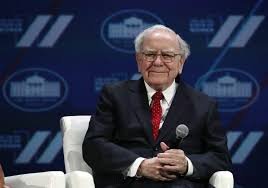
From Paperboy to Billionaire: A Look at Warren Buffett’s First Tax Return
Warren Buffett, now valued at a staggering $143 billion and once the world’s richest man, started his journey with remarkably modest earnings. As a teenager, the “Oracle of Omaha” earned pennies delivering newspapers. Remarkably, Buffett filed his very first tax return in 1944 at the tender age of 14, reporting income from his paper route in Washington, D.C.
According to the two-page tax filing he shared with PBS News Hour in 2017, young Warren owed a mere $7 in federal taxes. That year, he earned $592.50 – just above the $500 threshold required to file a return at the time. Adjusted for inflation, that $592.50 equates to approximately $11,244.32 today, with corresponding taxes of around $132.84. This is a stark contrast to the $26.8 billion Berkshire Hathaway paid in taxes in 2024, the highest amount ever paid by the company to the U.S. government, as reported in Buffett’s annual shareholder letter.
However, Buffett has consistently maintained that he doesn’t pay enough taxes. He recalls a time before 1965 when Berkshire “did not pay a dime of income tax,” a situation he deemed “an embarrassment.” He argued that such tax avoidance is acceptable for startups but unacceptable for established American industries.
Early Life and Entrepreneurial Spirit
Born on August 30, 1930, in Omaha, Nebraska, Warren Buffett was the son of Howard and Leila Buffett. His father, a stockbroker and later a four-term U.S. congressman, instilled in him a fascination with business and the markets. After his father’s election to Congress, the family moved to Washington, D.C., where Warren secured a paper route delivering the Washington Post and the Washington Times-Herald. His route even passed the homes of six senators and a Supreme Court justice!
In 1944, the paper route earned him $364. But Buffett’s entrepreneurial spirit didn’t stop there. Already investing at age 11, he also earned $228 in interest and dividends from three shares of Cities Service Preferred stock, bringing his total income to $592.50. He diligently deducted business expenses – $10 for watch repair and $35 for bicycle costs – mirroring the practices of seasoned entrepreneurs, even at 14.
From Paper Route to Global Investment Powerhouse
Buffett’s commitment to paying taxes is unwavering. He stated in 2016, “I have paid federal income tax every year since 1944… Though, being a slow starter, I owed only $7 in tax that year.”
The newspaper route was just the beginning. By age 15, he had earned $2,000 and invested $1,200 in farmland in Nebraska, even establishing a profit-sharing agreement with the farmer. He and a friend also launched a pinball machine business, growing it to three locations and eventually selling it for $1,200. By college graduation, Buffett had amassed $9,800 in savings.
He went on to study under the legendary value investor Benjamin Graham at Columbia Business School, launched his own investment partnership in 1956, and took control of Berkshire Hathaway in the mid-1960s, transforming it into the global powerhouse it is today. While he retired as CEO in late 2025, his net worth remains at $143 billion.
A Champion for Fair Taxation
Buffett’s relationship with the IRS has evolved. The meticulous teenager documenting bicycle repairs grew into a vocal advocate for higher taxes on the wealthy. He famously pointed out that his secretary, Debbie Bosanek, paid a higher effective tax rate than he did, calling it “outrageous.” This disparity led to the proposal of the “Buffett Rule,” requiring individuals earning over $1 million annually to pay at least 30% in taxes, though it was ultimately blocked in 2012.
At Berkshire Hathaway’s 2024 shareholder meeting, Buffett predicted higher taxes are “quite likely,” criticizing companies for exploiting tax loopholes. He believes that increased government revenue is necessary to address the fiscal deficit.
The story of Warren Buffett’s first tax return is a testament to his early entrepreneurial drive and his lifelong commitment to financial responsibility. It’s a fascinating glimpse into the origins of one of the world’s most successful investors and a reminder that even the greatest fortunes often begin with humble beginnings.
Source: Fortune



