
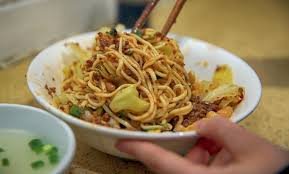
The Chongqing Xiaomian Phenomenon: How Spicy Noodles Conquered the World
Nestled in the heart of southwest China, Chongqing is a city celebrated not just for its stunning mountainous landscape and misty ambiance, but especially for its fiery, aromatic culinary soul. Unlike many southern Chinese regions where rice reigns supreme, Chongqing proudly declares its allegiance to noodles, a staple enjoyed from dawn till dusk. At the forefront of this noodle-centric culture are Xiaomian – small, spicy noodles that have transcended their humble street food origins to become a global culinary sensation, embodying the city’s vibrant and dynamic spirit.
A Culinary Heartbeat: The Allure of Xiaomian
For generations, Xiaomian has been more than just a meal in Chongqing; it’s a way of life. These flavorful bowls, characterized by their potent blend of chili oil, Sichuan pepper (ma la), and an array of savory seasonings, have long been the backbone of countless small, family-run eateries. While beloved locally, this fragmented structure, with its often inconsistent flavors and lack of unified branding, presented a significant challenge for nationwide expansion and industrial growth. However, the tide has turned dramatically for the Chongqing noodle industry, which now boasts an annual output value exceeding 56 billion yuan (approximately 7.9 billion U.S. dollars) and supports an estimated 86,000 noodle shops.
Industrializing a Delicacy: The Road to Global Dominance
Inspired by successful food industrialization models, such as the renowned snail rice noodles from Liuzhou, Chongqing’s Dadukou District initiated an ambitious project to revolutionize Xiaomian production. In 2021, the district embarked on building the Chongqing Xiaomian Industrial Park. This pioneering park integrates resources across primary, secondary, and tertiary industries, focusing on developing high-quality “ready-to-produce and ready-to-cook” noodles. Attracting over 80 companies, the industrial park has been instrumental in establishing crucial standards for noodle texture, chili oil spiciness, and seasoning ratios, ensuring consistent quality and enabling large-scale, efficient production.
Precision and Progress: The Role of Food Technology
Companies like Chongqing Jinguyuan Food Technology Co. are at the forefront of this industrial transformation. Their intelligent production workshops utilize automated lines to churn out semi-dried and pre-packaged noodles. By precisely adjusting flour gluten levels, refining drying techniques, and meticulously balancing seasonings, Jinguyuan has achieved remarkable consistency in flavor replication at scale. After meticulous stir-frying, packaging, and sterilization, their delicious noodles are distributed nationwide.
“We partner with universities and research institutes to extend shelf life through standardized production and technological improvements,” states Fu Yong, chairman of Jinguyuan Food Technology. “Strict quality control over toppings and sauces ensures a uniform taste, allowing consumers outside Chongqing to enjoy authentic flavors at home.” This commitment to innovation is key to the Chongqing food industry’s expansion.
Savoring Success: Innovation in Marketing and Reach
The evolution of the Chongqing noodle industry also encompasses dynamic marketing strategies, blending online engagement with offline experiences. A prime example was the Chongqing noodle pop-up event in Chengdu’s famous Kuanzhai Alley, which drew massive crowds and generated over 5 million yuan in sales through live cooking demonstrations and tastings. Locals, like Mr. Li, affirmed the experience: “The numbing Sichuan pepper and chili aroma are the soul of Chongqing spicy noodles.”
Brands like Xiangliao have leveraged digital platforms, initially building their following through short-video platforms like Douyin (TikTok). Co-founder Yin Dongqin explains, “Now, we bring our products directly to consumers, combining livestreaming with on-site tastings to connect with people nationwide.” With eight regionally fine-tuned seasoning flavors and over 5 million social media followers, Xiangliao demonstrates the power of modern marketing in the Chinese cuisine landscape.
From Local Bowls to International Shores: Chongqing’s Global Flavor
As the industrial chain expands and ready-to-eat Chongqing noodles gain domestic popularity, their international presence is also flourishing. The city has designated Xiaomian as a key specialty industry, now generating over 56 billion yuan annually, with daily sales exceeding 12 million bowls and creating nearly 500,000 jobs.
In a Dadukou warehouse, pre-packaged noodles are dispatched globally through international logistics networks. In Los Angeles, U.S. supermarkets like Costco have been stocking Chongqing noodles for nearly two years. Companies such as Yongheji Food have successfully obtained U.S. FDA certification, paving the way for broader market penetration. Leveraging its strategic position at the intersection of the Belt and Road Initiative and the Yangtze River Economic Belt, Chongqing serves as a vital trade gateway. Local companies now export pre-packaged noodles to over 30 countries and regions, including Thailand and Singapore, with annual overseas sales exceeding 40 million yuan.
The Future is Flavorful: Sustaining Growth and Appeal
Recent events, such as the Chongqing Noodle Promotion Season and Xiaomian Cultural Festival, underscore the industry’s global appeal. These festivals, featuring livestreaming, product displays, and tasting events, have not only celebrated this iconic dish but also fostered future growth. Ten projects covering brand development, technology research, and export initiatives were signed, totaling 1.345 billion yuan in investment, promising new momentum for international expansion.
From bustling street corners to global supermarket aisles, Chongqing Xiaomian exemplifies a remarkable journey of culinary heritage meeting modern industrial prowess. This spicy noodle, once a local secret, is now a testament to Chongqing’s innovation and a delicious ambassador of Chinese cuisine to the world, proving that a great flavor story can indeed conquer borders.



