
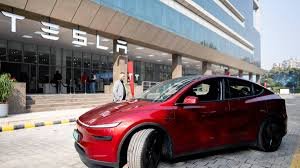
Tesla in India: The Long-Awaited Electric Surge
For years, the automotive world has been buzzing with a single question: When will Tesla finally launch in India? As one of the world’s fastest-growing economies and a hub for technological innovation, India represents a massive opportunity for Elon Musk’s electric vehicle (EV) empire. However, the road to entry has been filled with diplomatic negotiations, tax hurdles, and strategic pivots.
From the allure of a potential Gigafactory to the complexities of import duties, the saga of Tesla India is more than just a business expansion—it is a clash of economic philosophies and a glimpse into the future of sustainable transport.
The Great Tax Tug-of-War
The primary obstacle hindering Tesla’s entry has been India’s steep import tariffs on completely built-up (CBU) vehicles. To protect local manufacturers, the Indian government has historically imposed high taxes, making imported Teslas prohibitively expensive for the average consumer.
Elon Musk has consistently advocated for lower import duties to test the market before committing to a massive local investment. In response, the Indian government recently introduced a new EV policy that lowers import taxes for companies that commit to investing at least $500 million and setting up a local manufacturing plant within three years.
This move is a clear signal: India wants Tesla, but it wants the jobs, technology, and infrastructure that come with local production.
Why India is a Strategic Goldmine for Tesla
Tesla isn’t just looking for more sales; it is looking for scale. Here is why the Indian market is so attractive:
- n
- Rapid Urbanization: With a growing middle class and an increasing appetite for luxury tech, the demand for high-end EVs is skyrocketing.
- Government Push for Green Energy: The Indian government’s commitment to reducing carbon emissions makes the environment ripe for EV adoption.
- Supply Chain Potential: India offers a vast pool of engineering talent and a growing ecosystem of battery components and electronics.
The Local Competition: Tata and Mahindra
Tesla won’t be entering a vacuum. Local giants like Tata Motors and Mahindra & Mahindra have already established a strong foothold in the affordable EV segment. While Tesla brings the prestige and the cutting-edge Autopilot technology, local brands have the advantage of price point and existing service networks.
The real battle will be in the luxury segment, where Tesla is expected to dominate if it can align its pricing strategy with the local market’s realities.
What’s Next? The Gigafactory Dream
The ultimate goal for Tesla India would be the establishment of a Gigafactory. Such a facility would not only slash costs by eliminating import duties but would also position India as an export hub for right-hand-drive EVs for other markets in Asia and Africa.
According to reports from Reuters, negotiations remain fluid, but the momentum is shifting toward a favorable agreement. The arrival of Tesla could act as a catalyst, forcing other global automakers to accelerate their EV timelines in the region.
Final Thoughts
The entry of Tesla into India will be a landmark moment for the global automotive industry. It represents the convergence of Silicon Valley innovation and Indian industrial ambition. Whether it happens through a phased import approach or an immediate manufacturing plunge, one thing is certain: the electric revolution in India is inevitable.
Are you waiting for a Tesla in your garage? Let us know your thoughts on the future of EVs in India in the comments below!



