
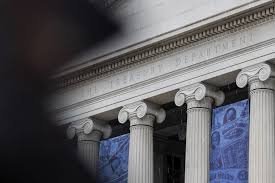
Stock Market Today: Why the 5% Treasury Yield Spike is a Wake-Up Call for Investors
The financial world is currently witnessing a pivotal moment. The 10-year Treasury yield recently breached the critical 5% threshold, a level not seen with such consistency since 2007. For anyone tracking the stock market today, this isn’t just a number on a screen—it is a signal of a fundamental shift in the global economy.
But what does a spike in bond yields actually mean for your wallet, your home, and your investment portfolio? Let’s dive into the ripple effects of this market volatility.
The Direct Impact: Higher Borrowing Costs for Everyone
When the 10-year Treasury yield rises, it acts as a benchmark for almost all other interest rates in the economy. This means the “cost of money” goes up. The most immediate sting is felt in the housing market.
- n
- Mortgage Rates: Mortgage lenders closely track Treasury yields. Recently, the average 30-year fixed mortgage rate climbed to 6.76%, a significant jump from the 6.15% seen at the start of the year.
- Consumer Loans: From auto loans to personal lines of credit, borrowing is becoming more expensive for the average American.
- Corporate Debt: Businesses facing higher borrowing costs may see their profit margins shrink, potentially impacting their growth strategies.
The Tug-of-War: Bond Yields vs. the Stock Market
There is often an inverse relationship between bond yields and stock prices. But why does this happen? To understand the Treasury bond dynamic, you have to look at risk and reward.
When “safe” government bonds offer a high return (like 5%), investors may move their money out of riskier assets—such as stocks—and into bonds. Furthermore, higher yields increase the discount rate used by analysts to value future company earnings, which can lower the current perceived value of a stock.
However, there is a silver lining. Despite the climb in yields, the S&P 500 has remained resilient, staying up by more than 10%. This suggests that strong corporate earnings can often outweigh the anxiety caused by rising rates. As long as economic growth remains robust, the market can absorb these increases.
A Global Phenomenon: The End of “Cheap Money”
This isn’t just a US problem. We are seeing a global rout in the bond market. From the UK to Germany and France, yields are hitting multi-decade highs. Several factors are fueling this fire:
- Inflation & Energy: Soaring energy prices are forcing central banks to keep interest rates high to curb inflation.
- Geopolitical Tension: Uncertainty surrounding conflicts, specifically the war with Iran, has added a layer of volatility to global markets.
- Government Debt: Investors are becoming increasingly skeptical of bloated national budgets and mounting deficits.
What Should Investors Watch Now?
Financial experts, including those from Bloomberg and Capital Economics, suggest that we are entering a “normal for longer” era. The days of ultra-low interest rates following the 2008 crisis are likely gone.
While a 5% yield is a psychological threshold that some fear could lead to a market meltdown, it may simply be the new baseline. The key for investors today is to focus on quality—companies with strong balance sheets and the ability to grow despite higher borrowing costs.
Stay tuned to the latest market updates to navigate these volatile waters with confidence.



