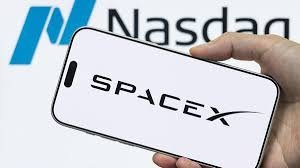
The Day Wall Street Changed: The SpaceX Public Debut
For years, SpaceX operated as the crown jewel of private aerospace, a mysterious entity fueling the dreams of Mars colonization. That changed on June 12, when SpaceX launched its initial public offering (IPO), shattering financial records and redefining the scale of corporate valuation. Raising over $75 billion in cash, the IPO became the highest-valued in Wall Street history.
But this wasn’t just about rockets. By bundling xAI within the SpaceX umbrella, Elon Musk effectively launched the first AI giant into the public market, leaping ahead of competitors like OpenAI and Anthropic. With a public valuation hovering around $2 trillion, SpaceX is no longer just a space company—it’s an AI and aerospace powerhouse.
From Billionaire to Trillionaire: The Musk Phenomenon
The IPO didn’t just benefit shareholders; it catapulted Elon Musk into a new stratosphere of wealth. Depending on the daily fluctuations of the market, Musk has become the world’s first trillionaire, with his net worth peaking at a staggering $1.32 trillion.
However, this wealth is famously volatile. Because his fortune is heavily tied to Tesla and SpaceX stocks, a bad trading day can wipe out billions. This “vibes-based accounting” reflects Musk’s cult-like status as a visionary, where market hype often outpaces actual balance sheets.
Is SpaceX Stock Coming to Your 401(k)?
You might find yourself invested in SpaceX even if you never bought a single share. Due to its massive valuation, SpaceX is set to debut on the Nasdaq-100. Because many retirement accounts and 401(k)s are tied to index funds that track the Nasdaq-100, the company’s shares will likely be automatically purchased and added to millions of portfolios.
The Controversy Behind the Inclusion
- n
- Rapid Entry: A recent rule change allowed SpaceX to bypass the usual 12-month vetting period.
- Risk Shift: Critics, including Senator Elizabeth Warren, have warned that this shifts the risk of a volatile, high-burn asset onto everyday families and retirees.
- Lack of Opt-Out: Financial analysts note that the structure of index funds makes it nearly impossible for individual investors to opt out of these holdings.
n
n
n
The Financial Paradox: Huge Revenue vs. Massive Losses
Despite the market euphoria, the internal numbers tell a more complex story. In 2025, SpaceX generated over $18.5 billion in revenue, yet it still operated at a loss of nearly $5 billion. Where did the money go?
The appetite for AI is expensive. SpaceX spent approximately $13 billion on chips and data centers to power xAI projects. When you add the $6.6 billion cost of depreciating rockets and satellites, it becomes clear that SpaceX is betting everything on a future where AI and space infrastructure converge.
The Global Ripple Effect: OpenAI and Political Ties
The volatility of the SpaceX IPO has sent shockwaves through the tech industry. Reports suggest that OpenAI may delay its own IPO until 2027, as CEO Sam Altman’s advisors caution against entering a market that is currently skeptical of high-flying, loss-making AI valuations.
Furthermore, SpaceX’s influence is extending into the political sphere. Discussions have emerged regarding the use of SpaceX stock to seed custodial investment accounts for children, further intertwining Musk’s business empire with government-backed financial initiatives.
Final Thoughts: A High-Stakes Gamble
Whether you are a retail investor or someone with a standard retirement plan, the SpaceX IPO represents a shift in how we view value in the modern era. It is a blend of cutting-edge technology, immense political influence, and high-risk financial engineering. As SpaceX continues to push the boundaries of the final frontier, the financial world is left to wonder: is this the future of investing, or a trillion-dollar roller coaster?
For more information on market regulations and IPOs, you can visit the U.S. Securities and Exchange Commission (SEC).