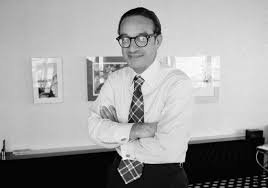
The End of an Era: Alan Greenspan’s Lasting Impact on Global Finance
The world of economics has lost one of its most influential figures. Alan Greenspan, the former chairman of the Federal Reserve who steered the U.S. economy through some of its most transformative decades, has passed away at the age of 100. His passing, confirmed by his wife, Andrea Mitchell, marks the end of a chapter for a man often described as the “maestro” of monetary policy.
Greenspan wasn’t just a bureaucrat; he was a pivotal force in defining modern American capitalism, bridging the gap between the Cold War era and the digital revolution. For five terms under four different U.S. presidents, he held the reins of the Federal Reserve, wielding power that resonated far beyond the borders of the United States.
The Golden Years and the “Greenspan Put”
Greenspan is best remembered for presiding over one of the longest economic expansions in U.S. history, stretching from 1991 to 2001. This era was characterized by rapid globalization and the explosive rise of the internet, leading to an unprecedented boom in the stock market.
During this time, he achieved a level of celebrity rarely seen in economics. He became known for the “Greenspan put”—a market belief that the Fed would intervene to support financial markets during periods of instability. His ability to navigate the “dotcom” bubble and the economic shock of the September 11 attacks solidified his reputation as a steady hand in a volatile world.
A Complex Legacy: Brilliance and Blind Spots
Despite his successes, Greenspan’s legacy is not without controversy. While he famously coined the term “irrational exuberance” in 1996 to warn about inflating stock prices, critics argue he missed the warning signs of the early 2000s housing bubble.
- n
- Deregulation: Greenspan was a staunch advocate for the deregulation of the financial sector, a stance that many economists believe created the fragile conditions leading to the 2007-2008 global financial crisis.
- The “Credit Tsunami”: In a rare move of public humility, Greenspan later admitted before Congress that the financial collapse was a “once-in-a-century credit tsunami” that exceeded his theoretical expectations.
The Man Behind the Policy: From Jazz to Objectivism
Beyond the balance sheets, Alan Greenspan was a man of diverse intellectual passions. A former student at the Juilliard School, he played the jazz saxophone and clarinet, bringing a creative spirit to his analytical mind. He was also deeply influenced by the philosopher Ayn Rand, whose “objectivist” beliefs in laissez-faire capitalism shaped his approach to government and economics for decades.
His political journey was equally eclectic. Though a lifelong Republican, he maintained a strong professional bond with Democratic President Bill Clinton, whom he once jokingly referred to as the “best Republican president we’ve had in a while.”
Conclusion: A Giant of Economic History
From receiving the Presidential Medal of Freedom to being knighted by Queen Elizabeth II, Alan Greenspan’s accolades reflect a life of extraordinary achievement. Whether viewed as the architect of prosperity or a cautionary tale of deregulation, his influence on the Federal Reserve and the global economy is undeniable.
He leaves behind a legacy of intellectual brilliance, a willingness to acknowledge his mistakes, and a profound impact on how the world understands money, power, and the markets.