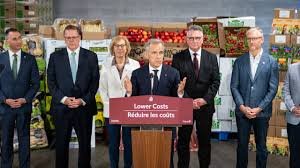
Mark Carney and the Future of Canada’s Food Strategy: A Path to Economic and Environmental Resilience
In an era where climate change and global supply chain instabilities are no longer distant threats but daily realities, Canada finds itself at a critical crossroads. At the center of the conversation regarding economic stability and sustainable growth is Mark Carney, the former Governor of the Bank of Canada and the Bank of England. His influence extends beyond traditional banking, moving into the vital intersection of finance, climate action, and the food strategy for Canada.
But why is a financial expert weighing in on how Canada produces and consumes its food? The answer lies in economic resilience. A robust food strategy is not just about farming; it is about safeguarding the national economy against systemic risks.
The Economic Imperative of a Sustainable Food System
Mark Carney has long advocated for a transition to a net-zero economy. When applied to the agricultural sector, this means moving toward climate-smart agriculture. The goal is to create a system that not only feeds the population but does so in a way that restores the environment rather than depleting it.
The shift toward a modernized food strategy in Canada focuses on several key economic pillars:
- n
- Reducing Carbon Footprints: Implementing regenerative farming techniques to sequester carbon, potentially opening new revenue streams for farmers through carbon credits.
- Diversifying Supply Chains: Reducing reliance on volatile international markets to ensure that food prices remain stable for Canadian consumers.
- Investment in AgTech: Leveraging technology to increase crop yields while decreasing the use of harmful chemicals and excessive water.
Tackling Food Security and Inflation
For the average Canadian, the “food strategy” isn’t an abstract policy—it’s felt every time they visit the grocery store. With inflation impacting food prices, the need for a strategic, localized approach to food production has never been more urgent. By integrating Carney’s vision of sustainable finance, Canada can attract the necessary private capital to scale local food production.
A sustainable strategy ensures that Canada remains a global leader in agricultural exports while prioritizing domestic food security. This dual approach protects the GDP while ensuring that no Canadian goes hungry due to global market shocks.
The Path Forward: Finance Meets Farming
To achieve these goals, Canada must align its financial incentives with its environmental targets. This involves a transition where the Government of Canada and private investors collaborate to fund the transition to sustainable practices.
Key goals for the future of Canada’s food strategy include:
- Scaling Regenerative Agriculture: Shifting from industrial monoculture to diverse, soil-healthy systems.
- Urban Farming Integration: Utilizing vertical farming and urban gardens to bring food production closer to the consumer in cities like Toronto and Vancouver.
- Policy Alignment: Ensuring that trade agreements reflect the commitment to sustainable and ethical food production.
Final Thoughts
The intersection of Mark Carney’s economic expertise and Canada’s agricultural potential presents a unique opportunity. By treating the food strategy as a cornerstone of national security and economic health, Canada can lead the world in showing how a developed nation feeds its people without compromising the planet.
As we move forward, the synergy between sustainable finance and agricultural innovation will be the deciding factor in Canada’s ability to thrive in a changing climate. For more insights on global economic transitions, you can explore the World Economic Forum, where Carney frequently discusses the future of the global economy.