
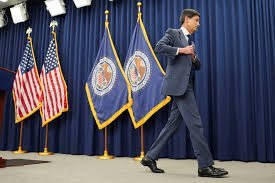
Kevin Warsh: A New Era for the President of the US Federal Reserve
For years, central banks have attempted to climb down from their “ivory towers,” striving for transparency and clearer communication to help the public understand the complexities of monetary policy. However, this openness has been a double-edged sword. While designed to provide clarity, it has often created a breeding ground for critics and market speculators who claim they can predict interest rate movements better than the experts themselves.
Enter Kevin Warsh, the new President of the US Federal Reserve. In a move that has stunned global markets, Warsh is signaling a dramatic shift in how the Fed communicates with the world.
The “Less is More” Philosophy
The financial world was buzzing in anticipation of Warsh’s first major conference. While many expected a signal regarding interest rate cuts—a long-standing demand from the U.S. administration—the real surprise was what Warsh didn’t say. In a departure from his predecessor, Jerome Powell, Warsh remained silent on the predictable evolution of inflation and employment.
While other Fed members continued the tradition of updating projections and signaling potential rate hikes, Warsh distanced himself from the exercise. His stance is clear: central banks say too much.
Why Silence Might Be Strategic
According to Warsh, excessive forecasting can be counterproductive. By tying the institution to specific projections, the Fed risks limiting its own flexibility. In a volatile economic environment, the ability to pivot quickly without being accused of “breaking a promise” is invaluable. This approach effectively removes the handcuffs from monetary authorities, allowing them to respond to real-time data rather than past predictions.
Bank of Canada vs. The Fed: A Study in Contrast
The debate over communication isn’t limited to the U.S. The Bank of Canada has frequently faced criticism for being a “closed boys’ club” and for failing to provide the same level of detailed projections—such as the “dot plot” used by the Fed—regarding unemployment and inflation.
- n
- The Fed’s Old Way: Heavy use of projections and forward guidance to influence market expectations.
- Bank of Canada’s Struggle: Criticized for a lack of official projections on unemployment, despite monitoring the labor market.
- The Warsh Way: A return to ambiguity to preserve institutional agility.
Some economists, like Professor Kevin Moran from Université Laval, argue that more information doesn’t always lead to better outcomes. When forecasts fail to materialize, the resulting explanations can often create more confusion than the original silence would have.
The Return of the “Oracle” Era
Seasoned observers of monetary policy are calling this a return to the era of Alan Greenspan. From 1987 to 2006, Greenspan presided over the Fed as a man of few words, earning the nickname “The Maestro.” He governed in a pre-social media age, where the central bank’s intentions were deciphered through careful analysis rather than direct press releases.
In today’s world of 24/7 news cycles and high-frequency trading, Warsh’s silence may force markets to rely on more unconventional tools—some even suggest the use of facial recognition AI to decode the mood of the Fed’s leadership.
Economic Headwinds and Political Pressure
This shift in communication comes at a precarious time. With inflation hitting multi-year highs and geopolitical tensions in the Middle East impacting energy prices, the President of the US Federal Reserve is under immense pressure. While political figures may push for lower rates to stimulate growth, the Fed must balance this against the risk of runaway inflation.
For those tracking the North American economy, including the updates provided by Statistics Canada, the synergy between the Fed and the Bank of Canada remains crucial for regional stability, regardless of who is speaking—or staying silent.



