
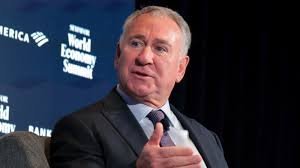
Ken Griffin: The Visionary Mind Behind the Citadel Financial Empire
In the high-stakes world of global finance, few names carry as much weight as Ken Griffin. As the founder and CEO of Citadel, one of the most successful hedge funds in history, and Citadel Securities, a titan in market making, Griffin has redefined how capital is managed and how markets operate in the digital age.
The Meteoric Rise of a Financial Prodigy
Ken Griffin’s journey is a classic tale of ambition and mathematical brilliance. Unlike many of his peers who followed traditional corporate paths, Griffin began trading convertible bonds from his dorm room at Harvard University in the late 1980s. His ability to spot inefficiencies in the market led him to launch Citadel in 1990 with just a few million dollars in seed capital.
Over the decades, Griffin transformed Citadel from a boutique operation into a global powerhouse. His approach combined rigorous quantitative analysis with an aggressive pursuit of excellence, allowing the firm to weather financial crises and emerge stronger than ever.
Citadel vs. Citadel Securities: Understanding the Difference
To understand Ken Griffin’s influence, it is crucial to distinguish between the two distinct entities he leads:
- n
- Citadel (The Hedge Fund): A multi-strategy investment firm that manages capital for institutional investors, utilizing complex algorithms and deep research to generate alpha.
- Citadel Securities (The Market Maker): A separate entity that provides liquidity to the markets. It acts as a middleman, ensuring that buyers and sellers can trade stocks, options, and treasuries efficiently.
This dual presence makes Griffin a central figure in the plumbing of the modern financial system, as market makers are essential for maintaining stability and liquidity in the stock market.
Innovation, Technology, and High-Frequency Trading
One of the hallmarks of Ken Griffin’s success is his relentless investment in technology. Citadel was an early adopter of quantitative trading and high-frequency trading (HFT). By leveraging supercomputers and low-latency networks, Griffin’s firms can execute trades in fractions of a second, capturing minute price discrepancies that are invisible to the human eye.
This commitment to tech-driven finance has not only yielded massive profits but has also pushed the entire industry toward a more automated, data-centric model.
Beyond Finance: Philanthropy and Global Influence
Beyond the trading floor, Ken Griffin is known for his significant philanthropic contributions and his eye for fine art. From massive donations to museums and educational institutions to his strategic move of Citadel’s headquarters to Miami, Griffin continues to shape the cultural and economic landscape of the United States.
His influence extends into the political sphere, where he is one of the most prominent donors, often advocating for fiscal responsibility and free-market principles.
Conclusion: The Legacy of Ken Griffin
Whether viewed as a financial genius or a controversial figure in the world of high-frequency trading, there is no denying that Ken Griffin has left an indelible mark on Wall Street. His ability to blend mathematical precision with bold leadership continues to make him a primary driver of the global economy.
For those looking to understand the intersection of technology and finance, studying the trajectory of Griffin and Citadel provides a masterclass in scale, efficiency, and strategic growth.



