The Meteoric Rise of LLY Stock: More Than Just a Pharmaceutical Trend
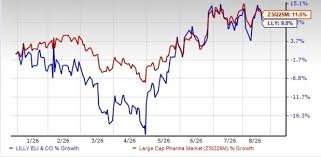
In the current stock market landscape, few tickers have captured as much attention as LLY. Eli Lilly and Company has transitioned from a steady pharmaceutical giant into a high-growth powerhouse, largely driven by a breakthrough in metabolic health. But for investors, the question remains: Is the current rally sustainable, or are we looking at a valuation bubble?
To understand the trajectory of LLY stock, we must look at the catalysts pushing the company toward a trillion-dollar market cap potential.
The GLP-1 Game Changer: Zepbound and Mounjaro
The primary engine behind Eli Lilly’s recent success is its development of GLP-1 receptor agonists. These medications, originally designed for type 2 diabetes, have revealed staggering efficacy in weight management.
- Mounjaro: A powerhouse for blood sugar control that has set new standards in diabetes care.
- Zepbound: The FDA-approved version specifically for chronic weight management, tapping into a global market with nearly insatiable demand.
The synergy of these drugs has created a “moat” around LLY, positioning them as a leader in the obesity epidemic fight alongside their main rival, Novo Nordisk. You can track the latest market performance of LLY stock on Yahoo Finance to see how the market reacts to new supply chain updates.
Beyond Weight Loss: The Alzheimer’s Frontier
While the weight-loss drugs grab the headlines, savvy investors are looking at Lilly’s pipeline in neurology. The company’s focus on Donanemab, a treatment for early-stage Alzheimer’s disease, represents another massive growth lever. By targeting amyloid plaques in the brain, Lilly is attempting to solve one of the most complex medical puzzles of the century.
Financial Outlook: Risk vs. Reward
Investing in LLY isn’t without its challenges. The stock currently trades at a premium P/E (Price-to-Earnings) ratio, meaning much of the future success is already “priced in.” Potential risks include:
- Supply Chain Constraints: The demand for Zepbound is so high that manufacturing capacity has become the primary bottleneck.
- Regulatory Pressure: Ongoing scrutiny over drug pricing in the US market.
- Competition: Other biotech firms are racing to develop oral (pill-form) GLP-1s to replace injectables.
Final Verdict: Should You Invest in LLY?
Eli Lilly is no longer just a “safe dividend stock”; it is a growth engine. For those with a long-term horizon, the intersection of obesity treatment and Alzheimer’s research provides a compelling narrative. However, short-term investors should be wary of volatility around earnings reports.
For official data on clinical trials and corporate governance, always refer to the Eli Lilly Investor Relations portal to make an informed decision.