
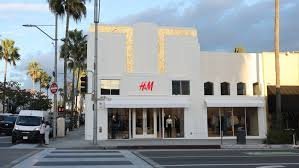
The New Era of H&M: Balancing Profitability and Innovation
The global retail landscape is shifting, and H&M is right in the middle of a massive transformation. Under the leadership of CEO Daniel Ervér, the Swedish fashion giant is executing a comprehensive revamp plan designed to streamline operations, enhance its product offering, and ultimately drive sustainable growth in an increasingly volatile market.
While the company has faced some headwinds—including a slight dip in reported sales due to currency fluctuations—the underlying strategy is clear: prioritize profitability over sheer volume.
Strategic Restructuring: Quality Over Quantity
H&M is no longer focused on simply having the most stores. Instead, the group is undergoing a global restructuring that involves:
- n
- Closing Underperforming Locations: By reducing the number of physical stores (down about 3% year-over-year), H&M is pruning its network to focus on high-traffic, high-conversion sites.
- Focusing on Full-Price Sales: The goal is to move away from heavy discounting and increase the percentage of items sold at full retail price.
- Flattening Management: By cutting middle management at its Stockholm headquarters, H&M is pushing decision-making closer to the customer to increase agility.
The AI Revolution in Fashion
One of the most exciting aspects of H&M’s turnaround is its heavy investment in digital infrastructure and Artificial Intelligence. The company is leveraging AI not just for efficiency, but as a core creative and logistical tool.
According to CFO Adam Karlsson, AI is now being used for “trend detection” and product development. This allows the brand to match product creation with real-time demand across diverse markets, shifting the role of design teams from traditional creators to expert curators.
Furthermore, AI models are being deployed to improve allocation forecasting, ensuring that the right products reach the right stores at the right time, reducing the risk of excess stock.
Navigating a “K-Shaped” Global Economy
H&M is currently navigating a bifurcated consumer market, often described as a K-shaped recovery. On one side, price-sensitive households are tightening their belts due to inflation; on the other, resilient luxury-leaning customers continue to invest in premium pieces.
This economic divide is evident in H&M’s regional performance:
- n
- Western Europe: Markets like the UK and Germany have seen a dip in consumer confidence, leading to a 3% sales decrease in local currencies.
- Southern Europe: Mediterranean markets remain resilient, showing a healthy 5% increase in sales.
- The Americas: While there is an upward trend, overly cautious supply planning previously limited growth—a gap the company is now closing.
Expansion and Brand Diversification
While the flagship H&M brand continues to evolve, the group is betting big on its higher-end labels like Cos and Arket, both of which are expanding their physical footprints.
In a bold move for growth, H&M is also aggressively entering new markets in Latin America. With a new store already open in Rio de Janeiro and plans for expansion in Brazil, Paraguay, and Argentina, the company is looking beyond traditional borders to find new revenue streams.
The Road Ahead: Resilience and Agility
H&M may not be the fastest player in the “speed to market” race, but it is building a formidable foundation of supply-chain resilience. By bringing production closer to European markets (nearshoring) and implementing RFID technology, H&M is becoming more agile.
From high-profile collaborations with designers like Stella McCartney to strategic partnerships with cultural icons like Anitta, H&M is successfully blending data-driven business logic with cultural relevance to win over the next generation of shoppers.
For a deeper dive into global retail trends, you can explore industry analysis on Reuters Business to see how other giants are adapting to the AI era.



