
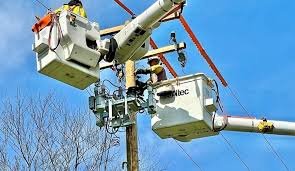
In a move that has sparked significant controversy, FirstEnergy, one of Ohio’s largest utility providers, is requesting the state’s Public Utilities Commission (PUCO) for greater leniency on its power grid reliability standards. This comes as extreme weather events increasingly strain the nation’s energy infrastructure, leading to more frequent and prolonged blackouts.
Ohio’s Grid at a Crossroads: FirstEnergy’s Bid for Flexibility
At the heart of the matter, FirstEnergy is asking to extend the time its three Ohio utilities—Cleveland Electric Illuminating Co., Ohio Edison, and Toledo Edison—can take to restore power following an horrific outage. Furthermore, Ohio Edison and Toledo Edison seek permission for a slightly higher frequency of outages per customer annually. This request, filed with the Public Utilities Commission of Ohio (PUCO), has ignited a fierce debate, especially given that regulators recently approved higher electricity rates for hundreds of thousands of Northeast Ohio customers.
The Proposal: What FirstEnergy Wants
- Longer Restoration Times: Allowing utilities more time to bring power back online after disruptions.
- More Frequent Outages: For Ohio Edison and Toledo Edison, a slight increase in the permissible number of outages per customer each year.
FirstEnergy argues that specific reliability standards should be based on an average of the preceding five years’ performance, with additional allowances for “annual variability in factors outside the Companies’ control, in particular, weather impacts.”
Consumer Advocates Push Back: A Matter of Fairness and Safety
Consumer and environmental groups are vehemently opposing FirstEnergy’s proposal, arguing it’s an unjust burden on customers who have already funded substantial grid-hardening upgrades. Maureen Willis, head of the Office of the Ohio Consumers’ Counsel, Ohio’s legal representative for utility customers, warns, “Relaxing reliability standards can jeopardize the health and safety of Ohio consumers.” She emphasizes that this move “shifts the costs of more frequent and longer outages onto Ohioans who already paid millions of dollars to utilities to enhance and develop their distribution systems.”
The Rising Tide of Weather-Related Blackouts
The context for FirstEnergy’s request is a grim national reality: power outages linked to severe weather are on the rise. A 2024 analysis by Climate Central revealed that such events nearly doubled between 2014-2023 compared to the preceding decade (2000-2009). The duration of these blackouts is also increasing, with the average length reaching 12.8 hours by mid-2025—a jump of almost 60% from 2022, as reported by J.D. Power.
Other utilities across the U.S. have also sought similar regulatory flexibility. In New York, for instance, two utilities asked to exclude certain tree-disease-related outages from their performance metrics. However, FirstEnergy’s situation is particularly scrutinized due to its history.
The Irony: FirstEnergy’s Climate Stance vs. Reliability
Critics highlight a striking irony in FirstEnergy’s argument. While the company points to “climate-change-driven weather variability” as justification for relaxed standards, it has a documented history of obstructing clean energy and energy efficiency initiatives—tools that advocates assert could cost-effectively enhance grid reliability and resilience against weather-related disruptions.
FirstEnergy’s track record includes:
- Abandoning interim 2030 goals for cutting greenhouse gas emissions in February 2024 and continuing to operate two West Virginia coal plants.
- Supporting efforts to weaken Ohio’s energy-efficiency goals.
- Urging the Department of Energy to use emergency powers to keep unprofitable coal and nuclear plants running during the first Trump administration.
- Spending approximately $60 million to lobby for and protect House Bill 6, Ohio’s largest utility corruption scandal, which led to the gutting of clean-energy standards.
“Honestly, I don’t know of a viable hypothesis for this increasing variability outside of climate change,” notes Victoria Petryshyn, an associate professor of environmental studies at the University of Southern California, who grew up in Ohio. She explains how extreme heat, humidity, and frigid air masses “supercharge” weather, leading to stronger storms and increased strain on the grid.
Questions of Transparency and Investment
The lack of transparency surrounding FirstEnergy’s plan is another major concern. Shay Banton, a regulatory program engineer and energy justice policy advocate for the Interstate Renewable Energy Council (IREC), questions the timing: “It feels too early for them to request leniency without proposing or implementing more comprehensive mitigations based on a detailed understanding of the root cause.”
Moreover, critics argue that FirstEnergy’s recent rate increases—such as the nearly $76 million approved for Cleveland Electric Illuminating Co.’s 745,000 customers—should already account for some weather-related factors. Karin Nordstrom, a clean-energy attorney with the Ohio Environmental Council, emphasizes that customers have paid millions for grid modernization “which are supposed to support the utility’s ability to adapt and improve the electric grid to rigging challenges from climate change.” She adds, “FirstEnergy has not provided the same investment in energy-efficiency programs, which can help manage rising demand at lower cost than expensive capital investment.”
Expert Opinion: Productivity, Not Leniency
Ashley Brown, a former Ohio utility commissioner and executive director of the Harvard Electricity Policy Group, believes additional leeway for weather variation is unnecessary. He argues that averaging utility performance over several years—a common regulatory practice—should already account for variability. “In fact, the standard should always be going up,” Brown asserts. “You should expect more productivity from the company.”
The Path Forward for Ohio’s Power Grid
As the Public Utilities Commission of Ohio prepares for an administrative trial, the stakes are high for millions of Ohioans. The debate over FirstEnergy’s request highlights the critical need for resilient infrastructure in the face of escalating climate challenges, balanced with accountability to consumers. Will Ohio regulators grant FirstEnergy the flexibility it seeks, or will they uphold stricter standards, pushing utilities to invest more aggressively in true grid modernization and clean energy solutions?



